

Hello, hello! A bit late as usual, but I’m here to share my experience at the Eurostar Conference this year. My talk was scheduled for 15:15 on Thursday, June 13th. Despite my initial anxiety, I managed to not only deliver my talk but also had time to attend other sessions and join two tutorials. Apparently, joining two tutorials was against the rules (shh 🤫)
The key highlights
Kick Ass Testing Tutorial
- Finding basis path: Ensure effective control flow testing by identifying the basis path.
- Draw diagram flow: Create a detailed flowchart diagram to visualize the process.
- Flipping decisions on baseline: Adjust decisions based on the established baseline to improve accuracy.
- Flow chart: Use flowcharts to map out the process and identify key decision points.
- Control flow testing: Test the control flow of the application to ensure all paths are exercised.
- Code exercise: Focus on exercising the code you wrote, not the code that wasn’t written.
- Business path analysis with JPath: Tools like JPath may not suffice for business path analysis; use domain analysis and equivalence class partitioning instead.
- Pairwise workflow: Employ pairwise testing to handle millions of possible tests, as it’s impossible to test everything.
- User behavior focus: Ask what the user does to the application, not what the application does to the user.
- Vilfredo Pareto principle: Apply the Pareto principle, noting that 20% of transaction types happen 80% of the time, and start with transaction history analysis.
- Pairwise tools: Use tools like Allpairs and PICT for pairwise testing, they are quite old school tho. No mention on AI tools to help creating the data, found a bit weird ?!?
- Data variation: Ensure multiple variations of data and a reasonable amount of data for thorough testing.
See the PDF below:


What Are You Doing Here? Become an Awesome Leader in Testing
My favorite part was discussing the things we’ve heard throughout the years in the QA and testing industry. Some of them include:
- Automate everything: Avoid unrealistic expectations like “automate everything” and ensure thorough testing to prevent missing bugs.
- More test cases mean better testing: Quantity over quality in test cases can result in redundant tests that don’t effectively cover critical scenarios.
- Just test it at the end: Believing that testing can be left until the final stages of development leads to overlooked defects and rushed fixes.
- Quality is the tester’s job: Assuming that only testers are responsible for quality undermines the collective responsibility of the entire team.
- We can catch all bugs with testing: Expecting testing to catch every possible defect overlooks the importance of good design and development practices.


Why AI is Killing – Not Improving – the Quality of Testing
This was the big one of the entire conference, largely due to the drama that unfolded at the end of the talk 🎭
I missed the point where the title resonated with the entire talk, and it was my fault for not reading the description and going just because of the title.
They compared the time it takes to build cars from ages ago to now (Ford and Tesla) and showed that it only saved 3 minutes. I’m not sure if they did this on purpose just to prove their point, but the comparison missed the complexity and features that have been added in the new cars, like the entire software and electric systems behind Tesla that didn’t exist before. These aspects weren’t considered in their comparison.
They also presented interesting analysis about when AI will catch up with human intelligence, as well as the gap that AI is creating between junior and senior developers. Not many people talk about this, but indeed, AI is a tool that can help us while also potentially making us lazy, similar to how calculators did; we still need to learn the basics


Basic Coaching Techniques for Emerging Quality Coaches
- Active listening: It involves fully concentrating, understanding, responding, and remembering what’s being said.
- Train yourself and learn: Continuously improving active listening skills through practice and feedback helps in understanding others better.
- Circle of control: Focus on what you can control in conversations—your responses, understanding, and actions.
- Feedback: Provide constructive feedback that helps the person improve without making them feel punished. Talk about the behaviour not the identity, don’t use BUT, use AND.
- Keep questions simple: Use straightforward questions that facilitate understanding and encourage deeper thought.
- Be present: Engage fully in the conversation, maintaining focus and showing genuine interest.
- 11k impressions: Recognize that perspectives can vary based on personal factors like fatigue and biases
- Keep questions simple: Frame questions clearly to facilitate understanding and encourage exploration of solutions.
- Acceptance: Reality gap ! Facts on the table. Easy ? No, necessary: yes
- You have the questions not necessarily know the answers. Help them to figure out how to find a solution.
- What are your three top values? Rank 1 to 10. This will help you and your mentee to connect.


QA Outsourcing: Triumphs, Trials, & Takeaways
Unfortunately, I couldn’t make this one as I was back to London, but I watched the video after and the main takeaways are:
- Strategic move: Outsourcing QA can strategically optimize resources and expertise.
- Drive success: Effective management of outsourced QA enhances product quality and market competitiveness.
- Growth: Outsourcing allows scalability and focus on core business functions.
- Competitive landscape: Leveraging external QA services brings agility and innovation to stay ahead in the market.
A Tester’s Guide to Navigating the Wild West of Web3 Testing

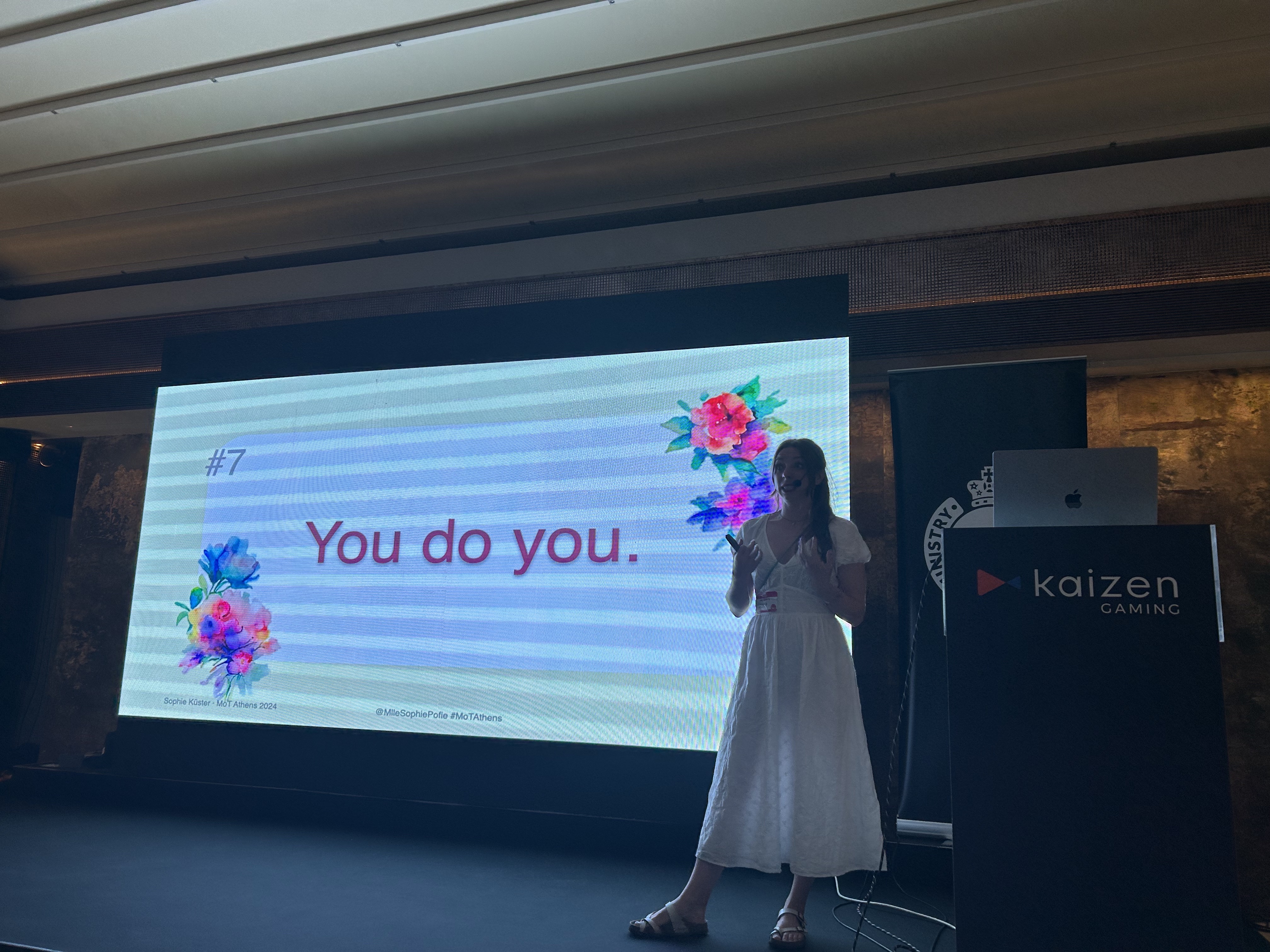
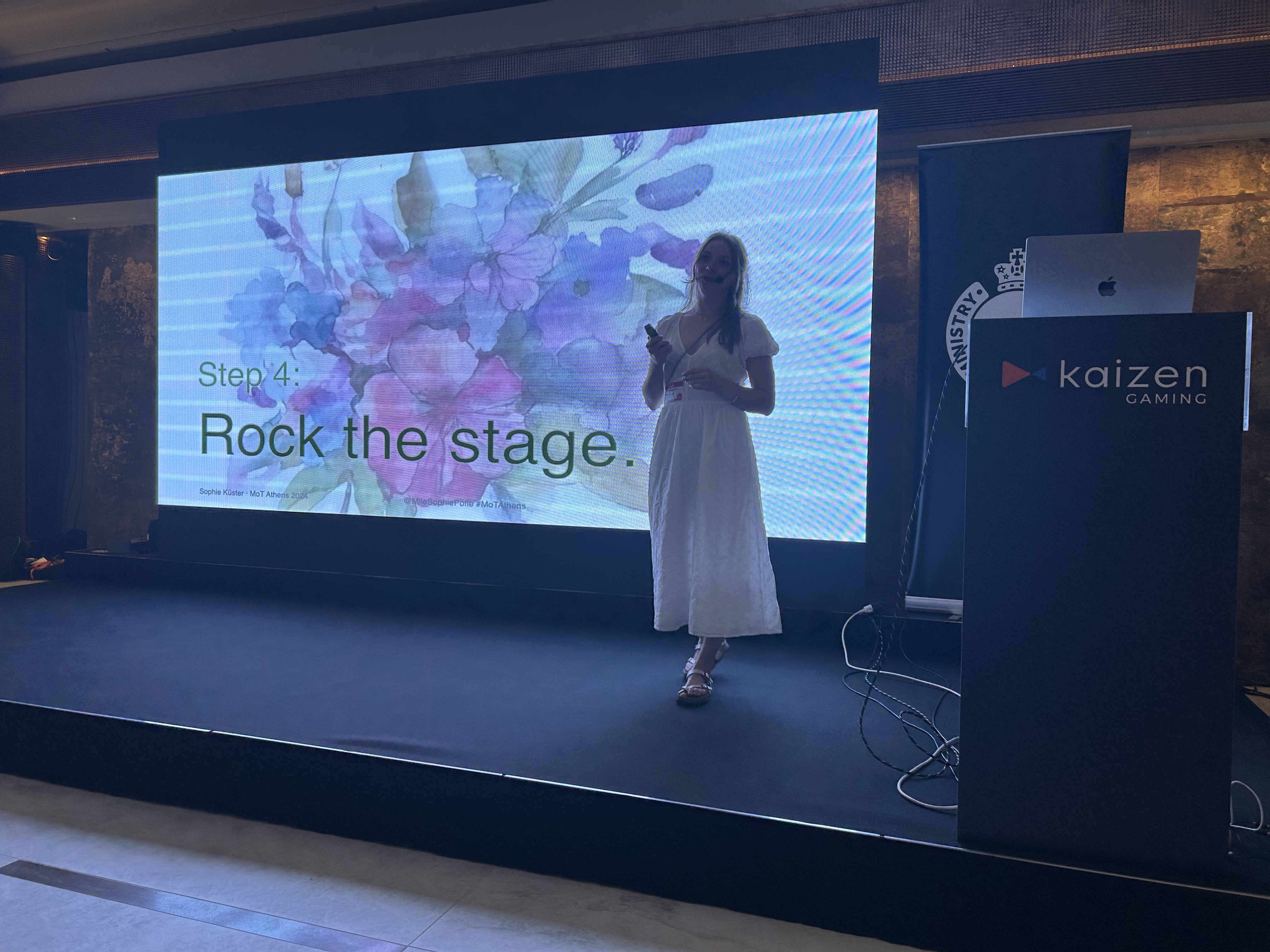
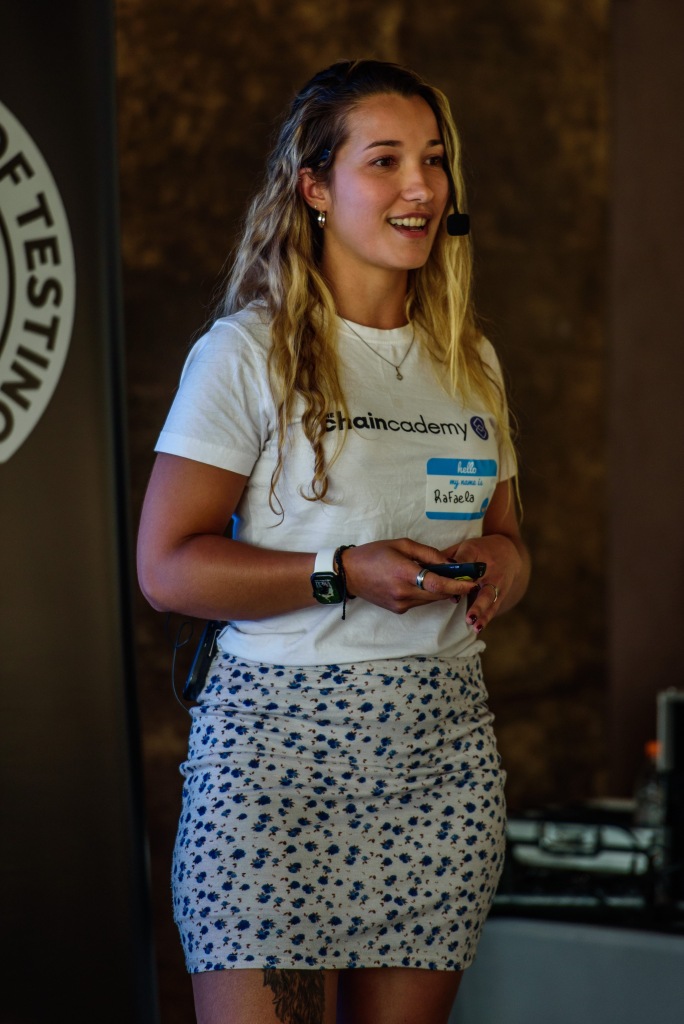
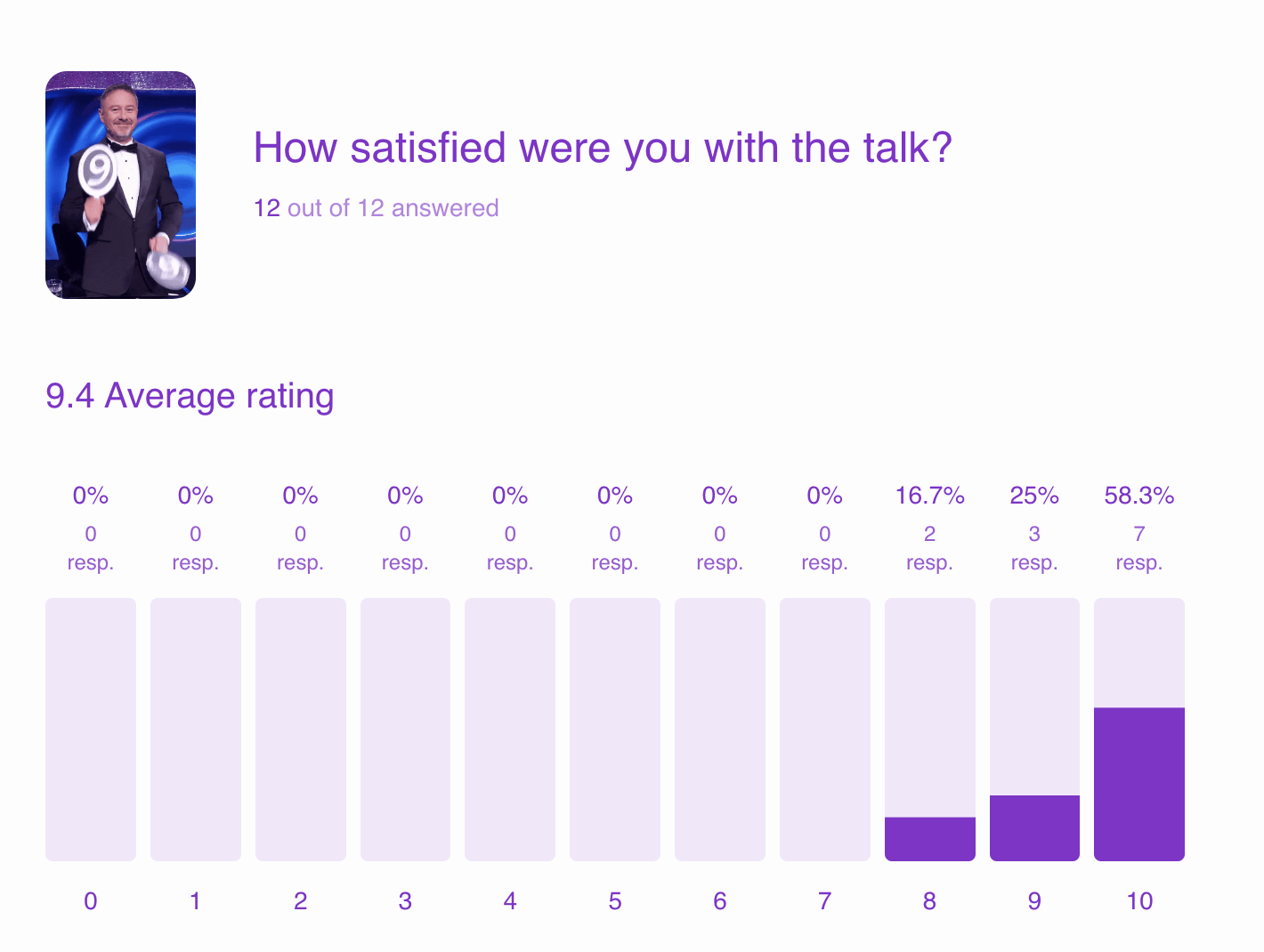
Here I am again, checking the feedback. As expected, the audience was quite different from the one I usually engage with. Since this conference is a bit more corporate, I didn’t anticipate too much variation in the audience. I was also extra nervous for this one, so instead of 45 minutes, I sped up and went into the fast lane, finishing the talk in just 30 minutes. I just gave you all some extra time for coffee! 😆
As always, I needed to gauge the Web3 knowledge level of the majority, and unsurprisingly, there is still a massive gap in education about what Web3 and Blockchain are. Thus, I spent a significant portion of my talk explaining these concepts.

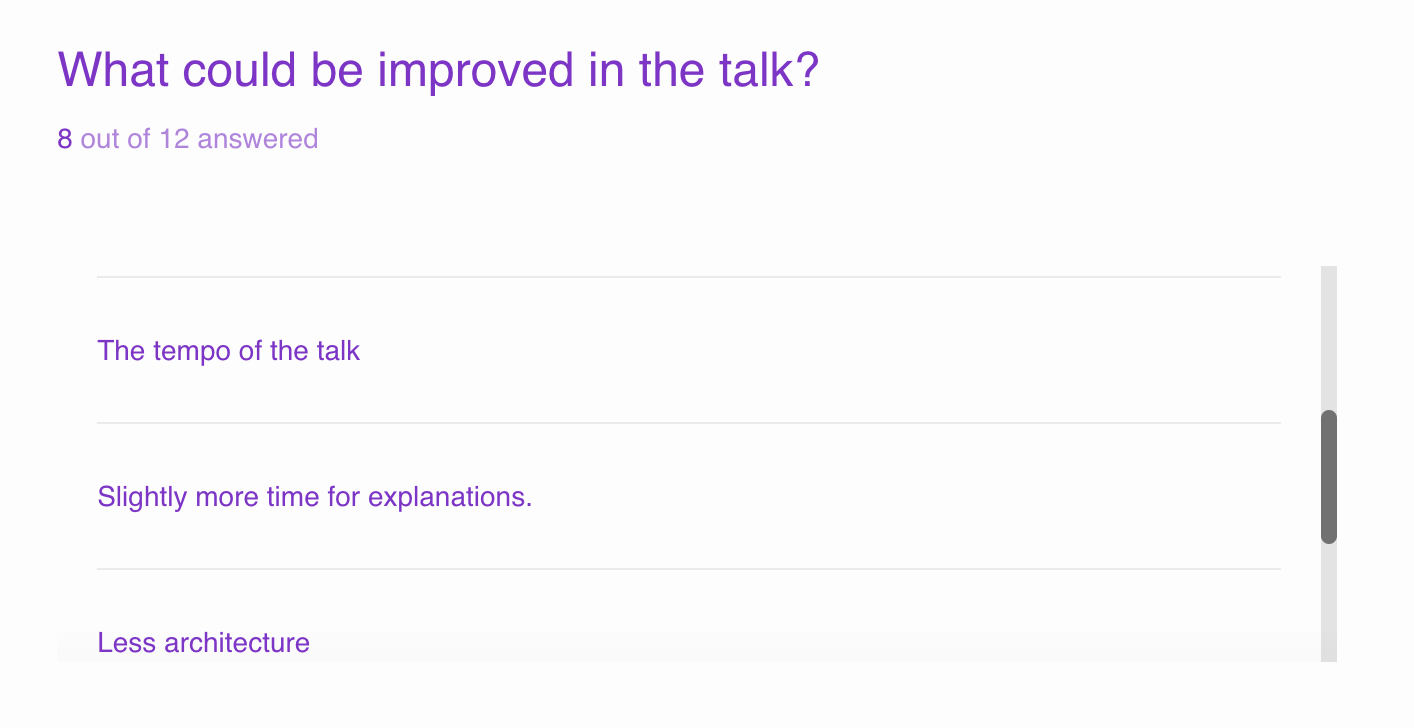
The feedback is quite contradictory. Some people said it was hard to follow because no background was provided, while others mentioned they didn’t know the talk would focus solely on Blockchain (which it did not). 🤷♀️
So, if I give more background, people complain. If I reduce the background, people will still complain. My take on that is it’s really hard to please everyone; sometimes I can’t even make my own dog happy! 😄
I still try, though. So, thanks to those who gave constructive feedback ❤️!
I’ll work on improving for the next one 🚀


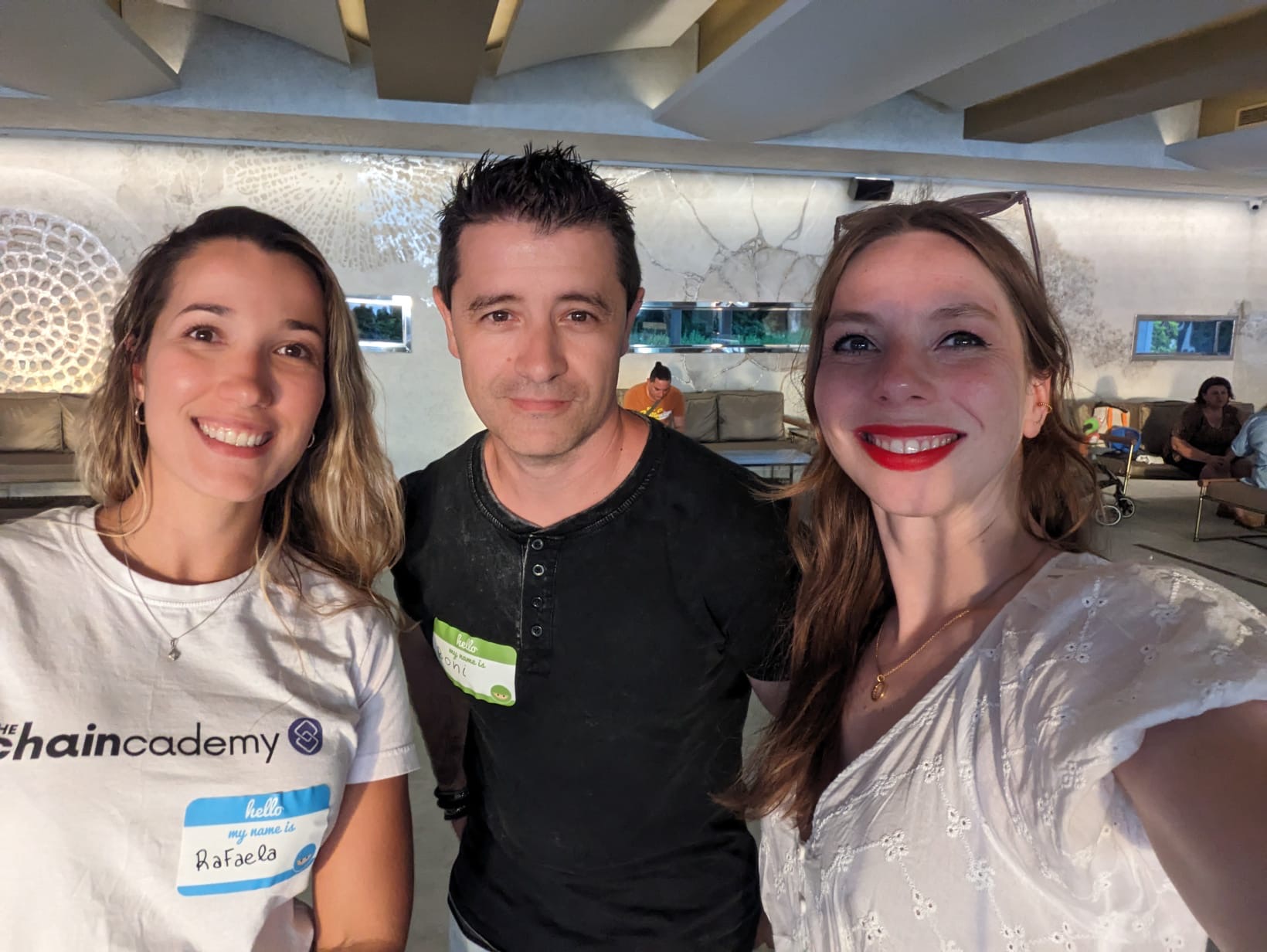
More random pictures with these great speakers whom I had the pleasure to meet, the cubic challenge, and also random exotic food talks on the boat party.


















 Rafaela Azevedo