Brazilian QA’s around the world series

Hello 👋 !

I recently received incredible feedback on a previous post, with many of you expressing curiosity about the differences between being a QA in Brazil and other parts of the world. 🌍

So, I’m thrilled to share that I’m launching a brand-new post series featuring interviews with talented professionals who migrated from Brazil and embraced the QA path in their new homes!

We will embark on a fascinating journey, exploring their experiences, challenges, and triumphs while adapting to QA practices in various countries. From the vibrant tech scenes of the USA to the innovative hubs in Europe and beyond, we’ll gain valuable insights and expand our horizons.

These interviews will delve into cultural differences, emerging trends, unique methodologies, and the evolving landscape of quality assurance. We’ll discuss their personal journeys, lessons learned, and the skills they found indispensable along the way.

So, get ready to be inspired, educated, and amazed by the stories of these exceptional professionals who embraced change, pursued their passions, and excelled as QAs in diverse corners of the globe. 🚀

If you have any specific questions or topics you’d like me to explore in this series, feel free to drop a comment or send me a message. Your input is invaluable! Let’s make this journey together!

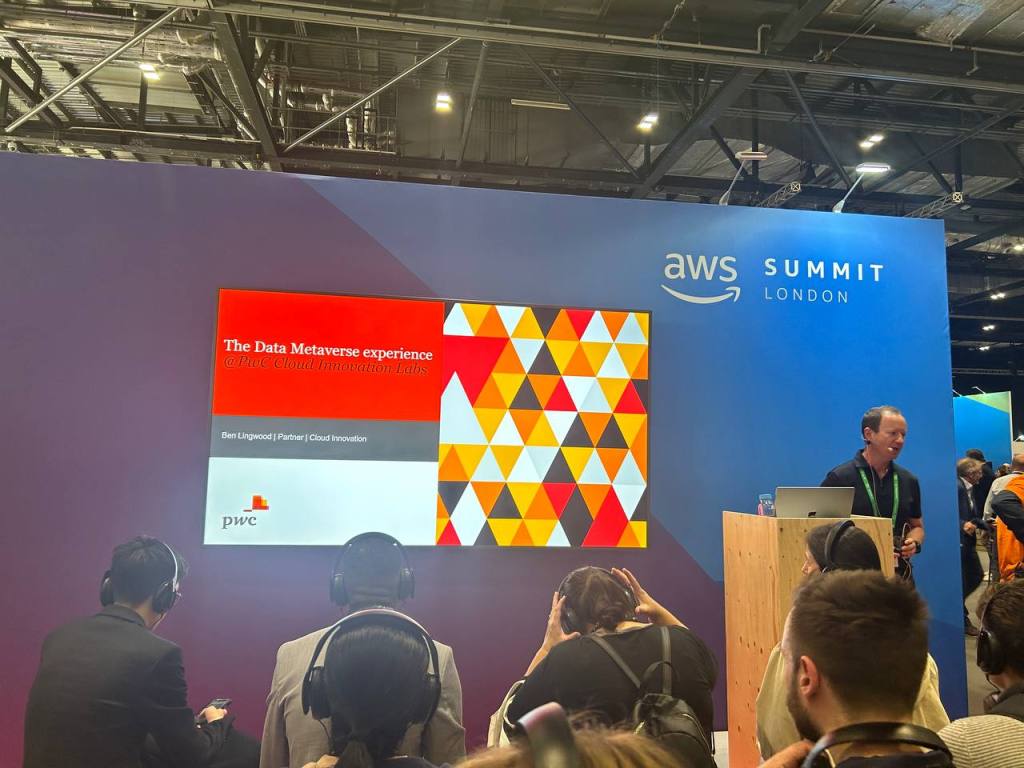
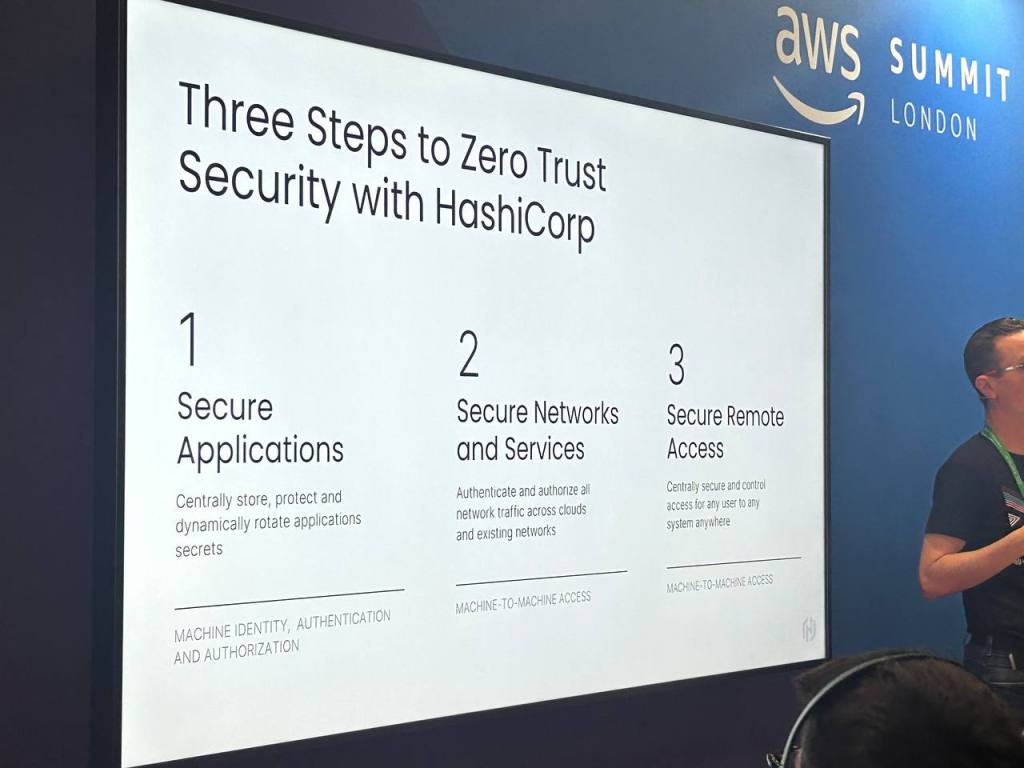
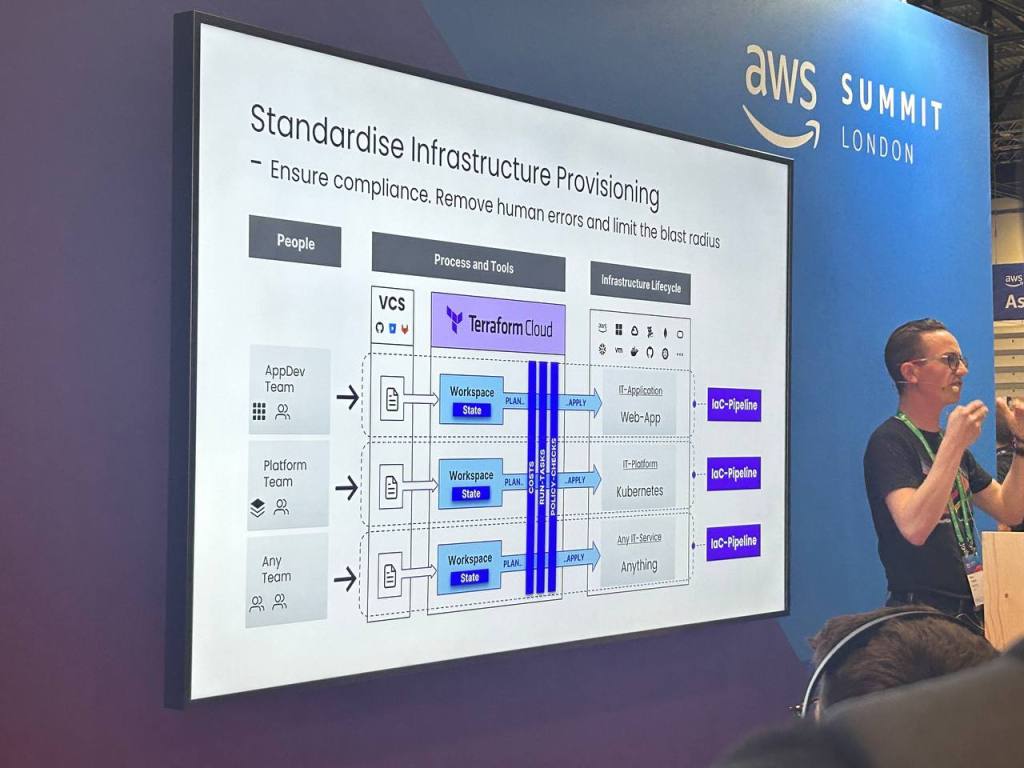
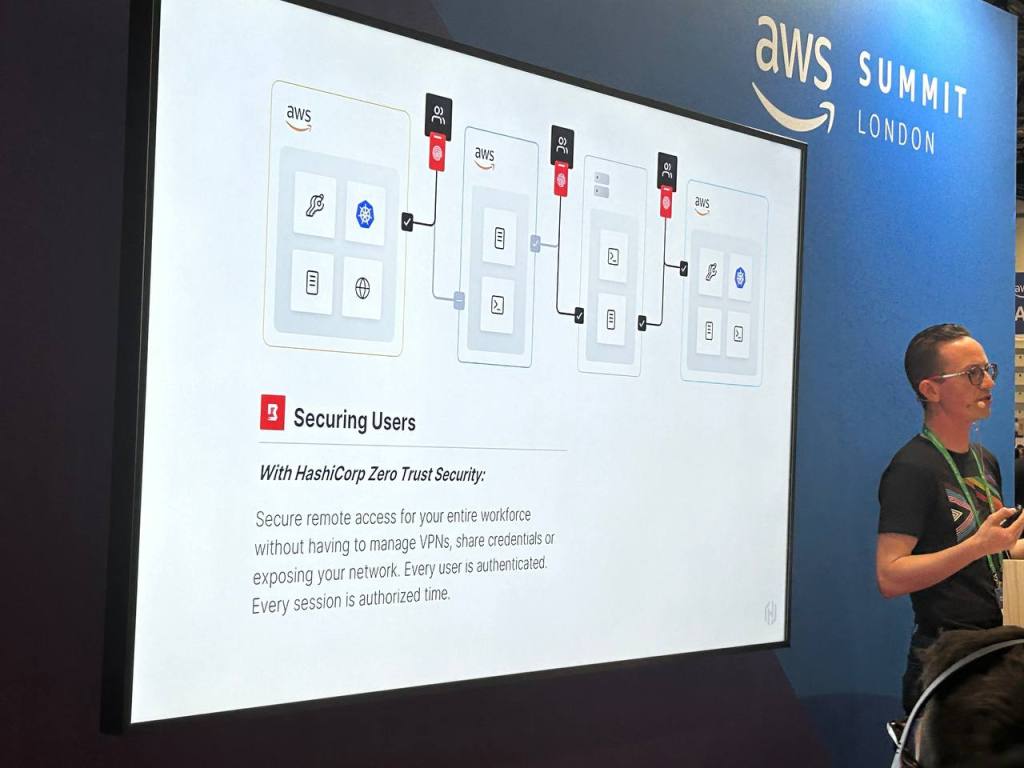
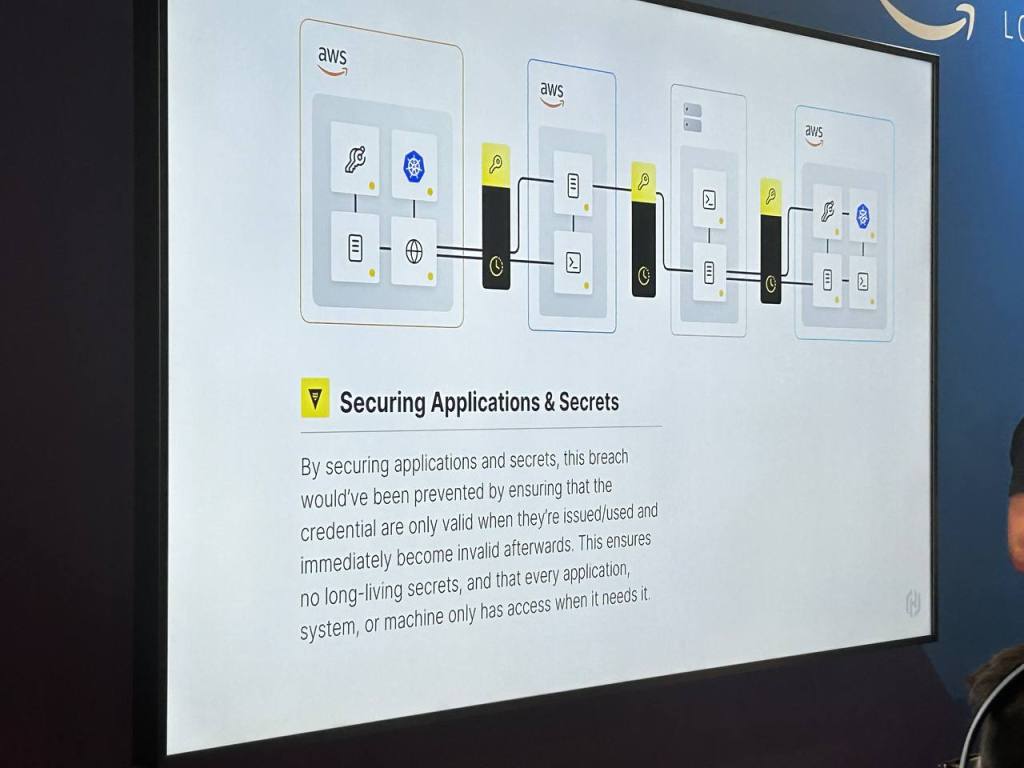
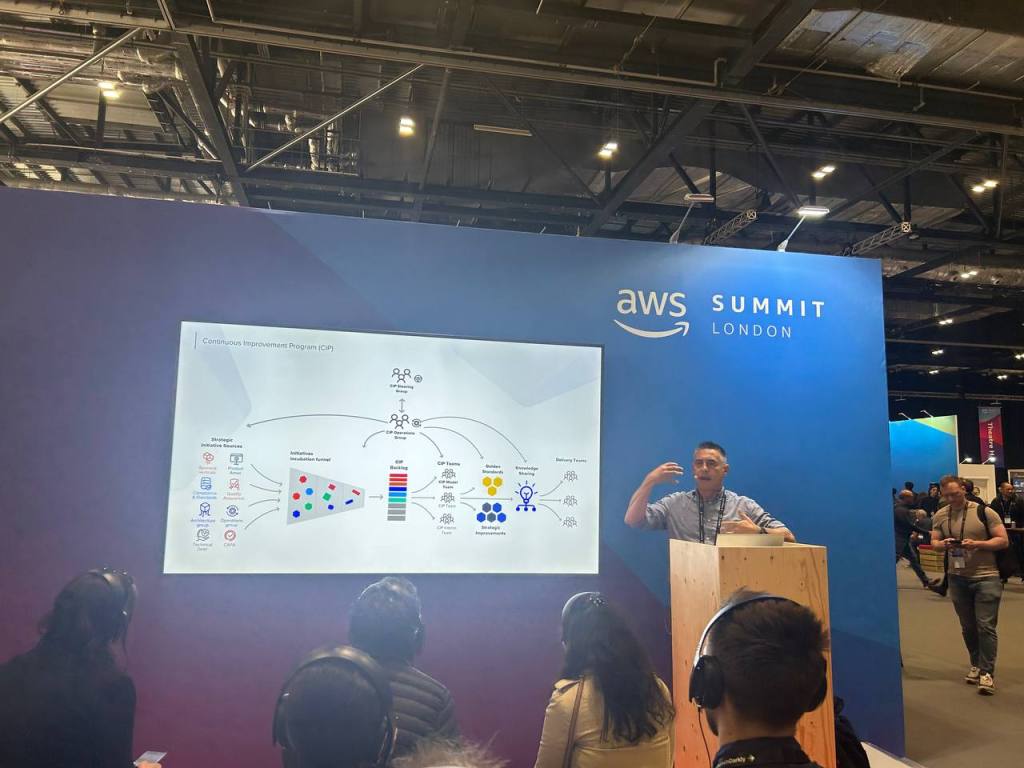
AWS SUMMIT 2023

This month I quickly attended the AWS Summit 2023 and here are my highlights from the conference:

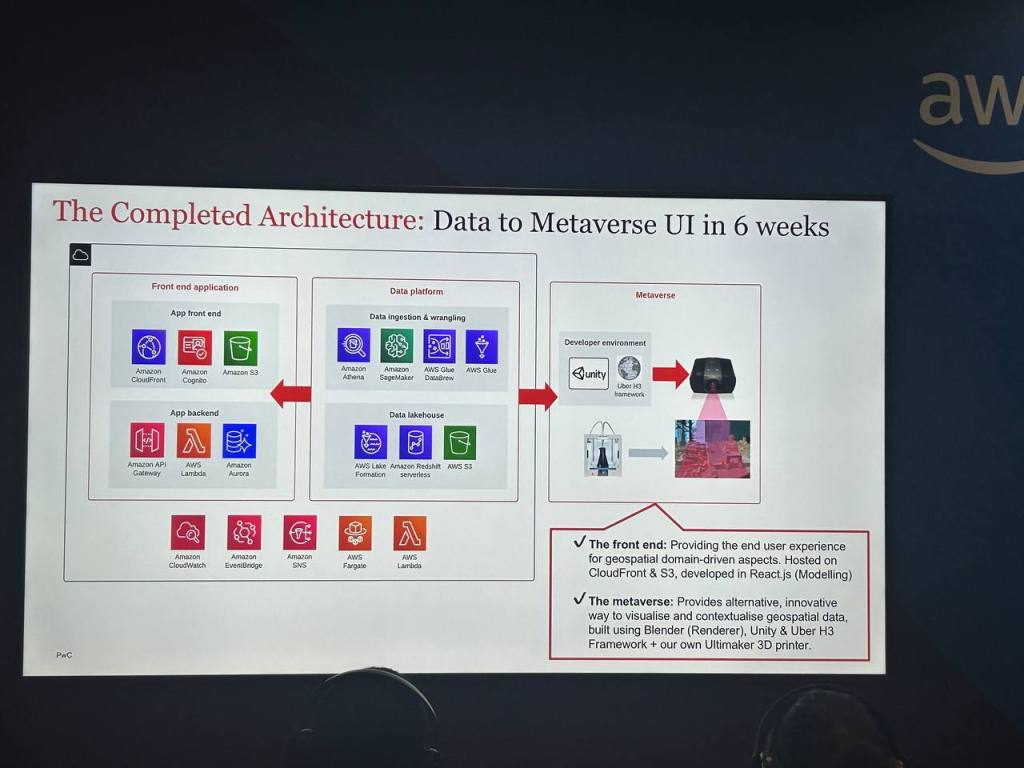
The Data Metaverse Experience

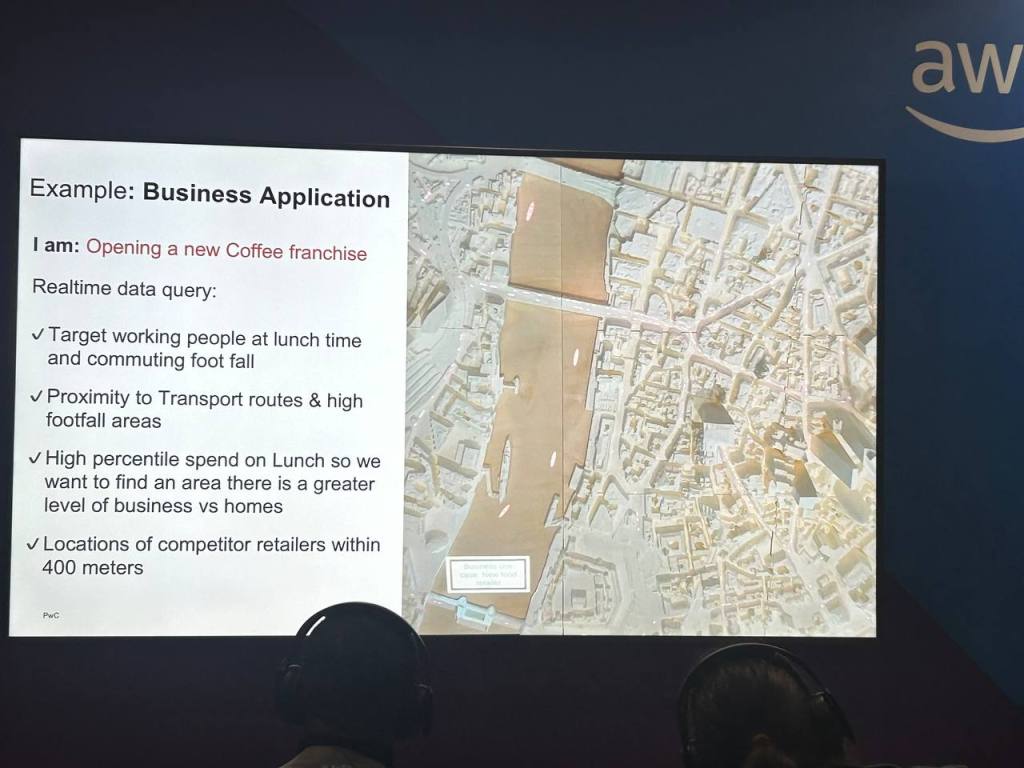
  • The metaverse is relevant to businesses, with several concepts and technologies already being utilised, like PWC is able to see what is the best place to start a coffee shop as they have enough data to show where the competitors are, business around where people go out for lunch, nearest public transports.
  • Enterprise applications, such as employee training and simulating operations, are currently leading the way in metaverse adoption.
  • The metaverse may experience cycles of boom and bust, similar to other innovations like AI and the internet.
  • It’s possible to separate the reality from the hype and take practical steps to meet your company’s metaverse needs.
  • The metaverse promises a realistic 3D digital world with persistent elements and decentralized control.
  • Business implications include virtual reality visualization, enhanced customer experiences, and parallel production in physical and virtual environments.
  • Companies are already using the metaverse for employee recruitment, collaboration, digital twins, customer experience enhancement, and marketing/selling virtual products.

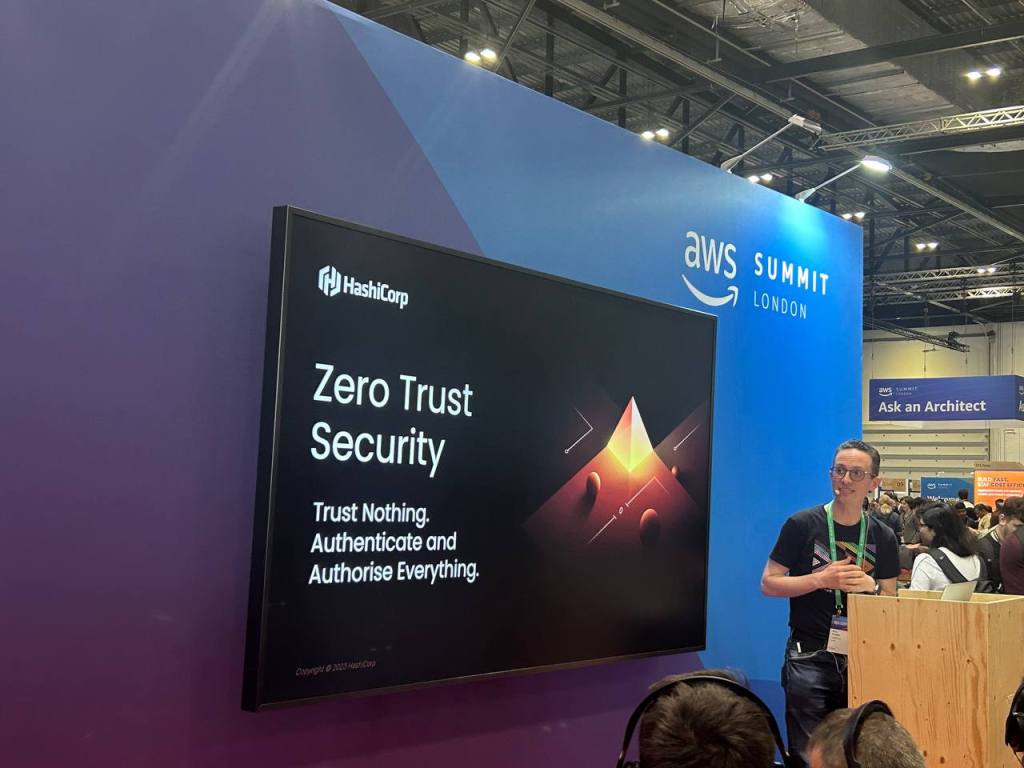
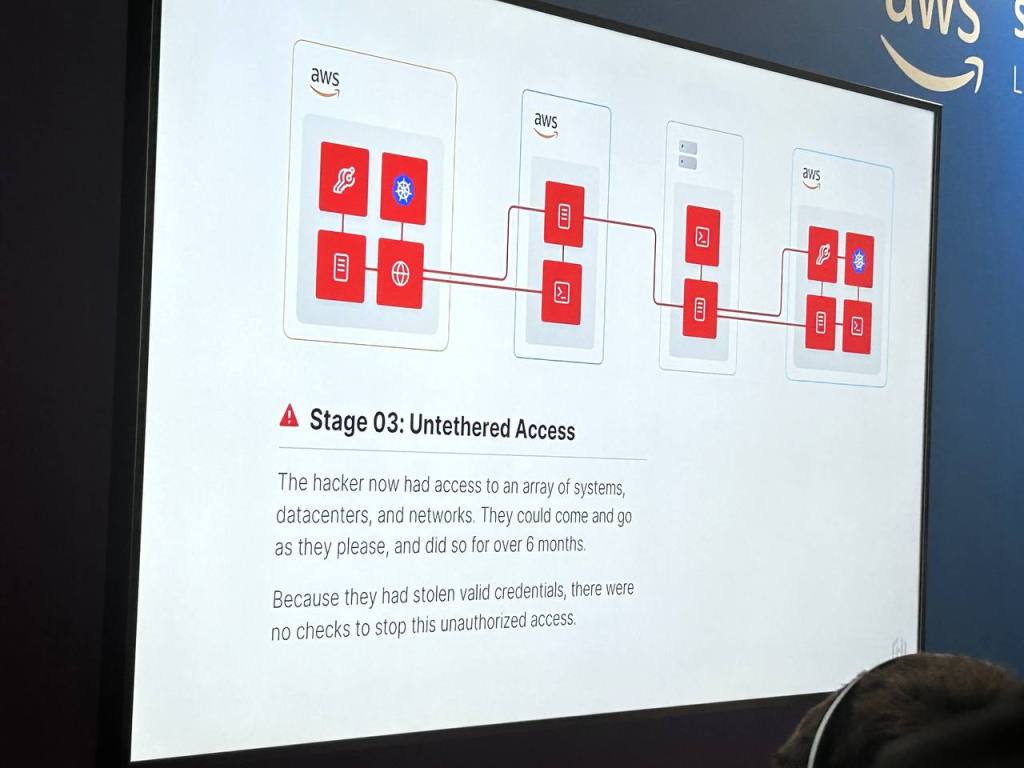
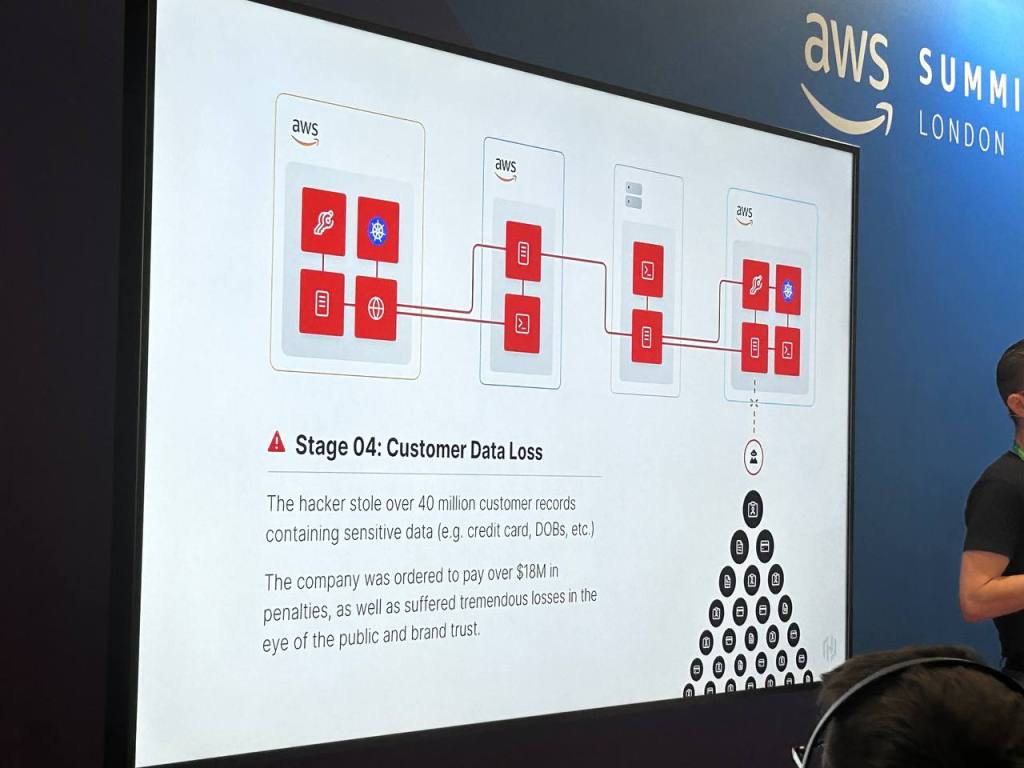
DON’T TRUST ANYONE

Make business and tech people happy

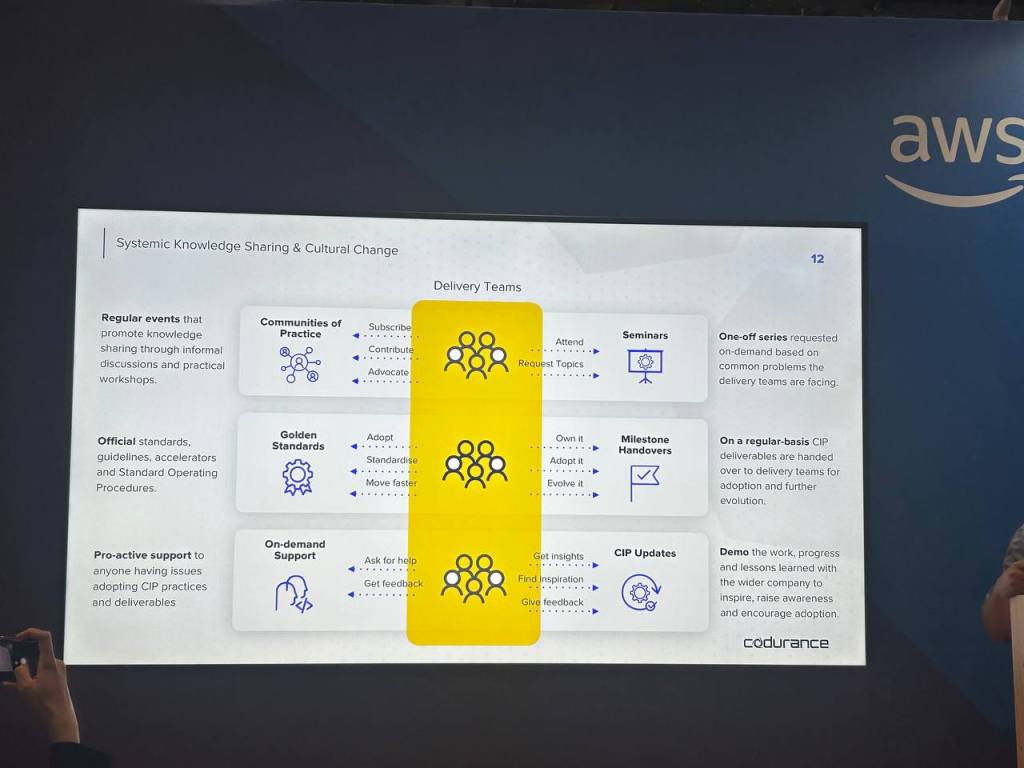
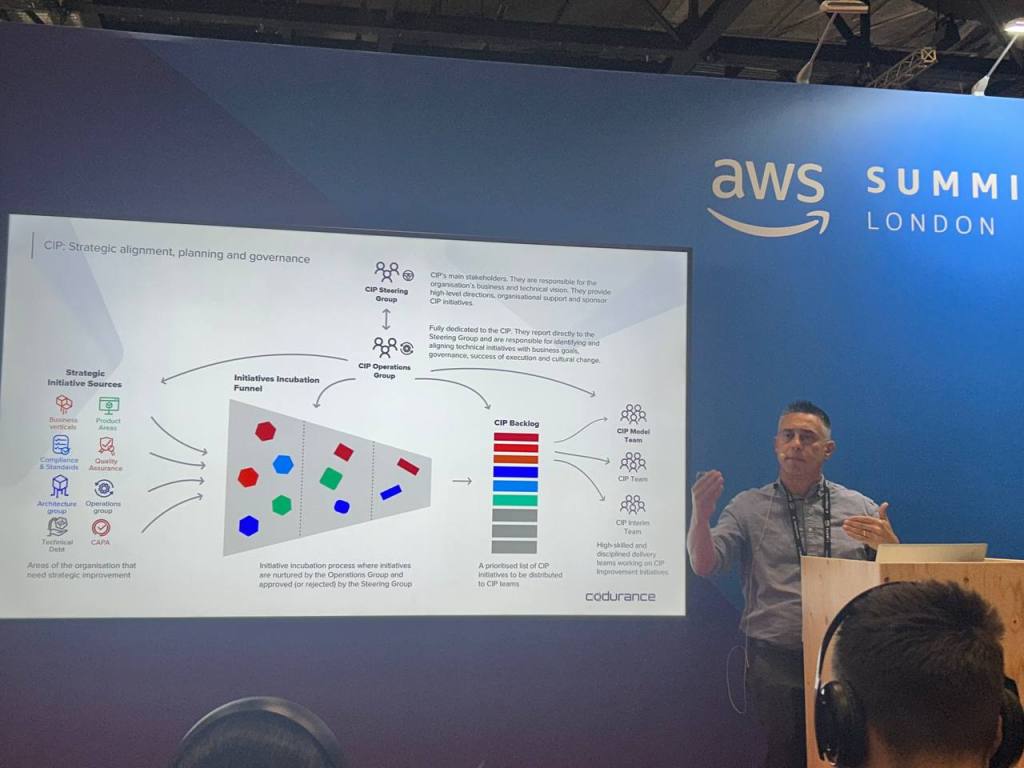
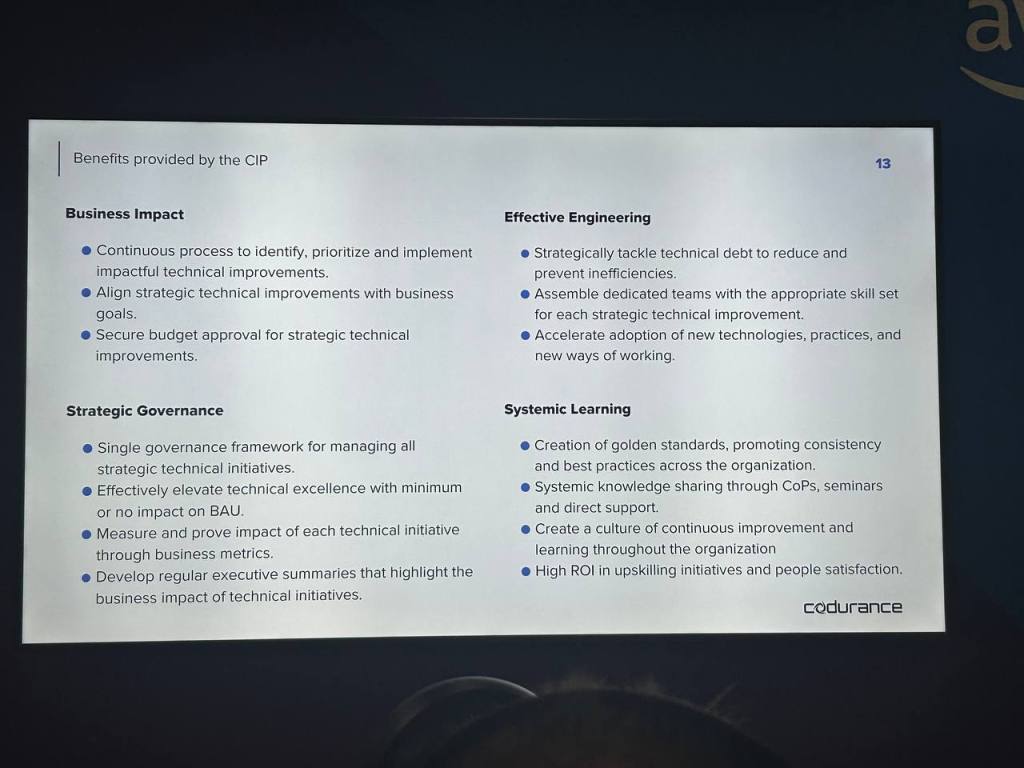
  • Community practice is extremely important, so if you are delivery lead be sure you promote regular knowledge sharing sessions, so people can contribute and also advocate for it.
  • All the teams need to follow some standards so they can move faster and the learning curve is not too long.
  • Tackle the tech debt to prevent and reduce inefficiency.
  • Promote webinars among the teams and also demos so people feel inspired to adopt and more aware of the updates.
  • All of these points will create a continuous improvement culture, were people feel they can take initiatives and feel more satisfied with their work.
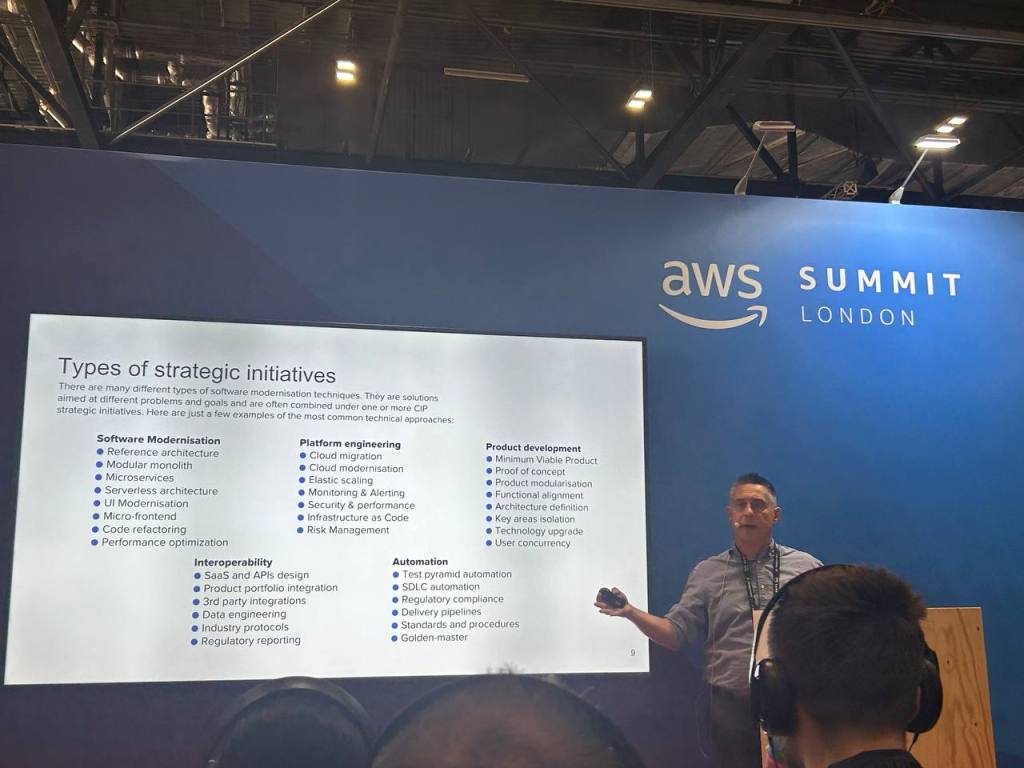
  • Align strategic technical improvements with business goal (This is kind obvious 😂 Try to make everyone happy and find a middle ground)
  • Continuous process to have technical challenges in the team. You know software engineers love to learn, this is what drives most of us.
  • Measure and prove impact of each technical improvement with metrics, and make sure it has minimum or zero impact on BAU.

And of course free lunch and coffee !! Joking, I didn’t even have lunch on that day 😂 Couldn’t watch all the talks I wanted, but was amazing to connect with like minded people, refresh my mind and learn new things!

Web3 Test Series: Lewis Prescott

Lewis Prescott

QA Lead at Cera Care (one of Europe’s fastest-growing companies). He talks about Contract API Testing: 99 minute workshops with Ministry of Testing, on Testers Island Discs and many meetups.

He provides services on how to get started with API Contract Testing, Contract Testing for Microservices, End to End Testing, Acceptance Test Driven Development!

What are contract tests, and how do they differ from smart contract tests?

 Contract testing is a framework for testing integrations between two services, for example an API and a mobile app. The contract is defined by the mobile application who requests data, shares the request and expected response with the API service which verifies the implementation matches the expectations. Imagine when you start developing a feature that has frontend and backend components. They must communicate with each other perfectly, in happy path and negative scenarios. These details are usually detailed within some form of documentation, but who is verifying that both sides have implemented according to the documentation? That’s where contracts come in.

Smart contract tests are also focused on testing agreements with the terms between contracts written into code, but the difference is that the contract that is compared against to is a contract deployed to a Blockchain. Same concept as normal contract testing but this time focused on the decentralised applications (DApps) and blockchain ecosystems.

Why are contract tests important in software development, and how do they differ from smart contract tests in blockchain development? 

Contract tests offer the ability to scale integration tests by using mocks and act as unit level tests. Large applications with many integration points can be verified quickly and without significant maintenance of test environments. There is plenty of logic such as http codes, required fields and error contents which can be verified via contracts without the need for heavy duty integration environments.

Smart contracts are the backbone of decentralized applications (DApps) and business logic. They help ensure that the code deployed on a blockchain accurately represents the intended business logic, functions correctly in different scenarios, and is resistant to security vulnerabilities, specially given the irreversible and immutable nature of blockchain transactions.

What are some of the challenges developers face when writing contract tests versus smart contract tests?

Contract tests has a bit overhead on setup, with provisioning the broker to store the contracts. Deciding whether you want to self host or use a SaaS solution. As well as the process shift of teams changing how they go about testing integrations. Moving from the authors of the API service writing their own tests to the consumer such as the mobile app writing tests. Often when implementing contract tests you already have integration tests, so persuading people to duplicate the effort can be a hard sell as well.

Smart Contract tests same as the Contract tests are not straight forward when you are starting specially as you need to have special knowledge to setup test networks, wallets, and tools. Another important point is the costs associated when deploying and testing smart contracts, especially when running large-scale or repeated tests. On top of those there is the blockchain specific challenges and security.

How do contract tests and smart contract tests differ in terms of the tools and frameworks used to implement them?

Contract testing most commonly uses Pact & Pactflow which supports multiple languages and frameworks such as graphql. Offering matchers and the ability to compare results makes implementing contract testing much easier. Pactflow offers a SaaS solution to store contracts securely and additional features to visualise dependents.

Smart contract tests are often implemented using dedicated blockchain development tools and language such as Truffle, Hardhat, Solidity. These frameworks provide additional features like contract deployment management, fixture data handling, and integration with test networks. Tools like Ganache provide local blockchain test networks that developers can use to deploy and test smart contracts.

How do contract tests and smart contract tests differ in terms of their level of complexity and the skills required to write them?

Contract testing gets complicated when you need to setup different states before the tests can run, for example data needs to be available within the API in order to test the specific scenario. The key skill though required is good communication and collaboration. Due to the teams now relying on each other to deploy and make changes. It’s important to communicate effectively and support each other’s changes. Contract tests also live next to the code, requiring a decent level of programming skills and knowledge of the application under test.

Smart contracts tests need to consider factors such as consensus mechanisms, gas costs, and security vulnerabilities, blockchain network, deploying contracts, and handling transactions. Additionally, skills in testing blockchain-specific functionality, such as testing for gas usage optimization and handling different network environments, are essential for writing effective smart contract tests.

Thanks for the participation Lewis ! It is always a pleasure to learn from one of the biggest leaders in the area ! 🙌

Web3 Test Series: Oleksandr Romanov

Oleksandr Romanov

Oleksandr Romanov is a Software Engineer in Test / Software Engineer from Dnipro, Ukraine.

He has 11+ years of experience in testing and test automation. His main area of expertise is building and leading test automation processes. He has worked with banking apps and payments services, CMS systems and mobile games. At the moment he is responsible for test engineering for a complex blockchain and blockchain-based applications.

He loves to share his knowledge in the form of articles and conference talks. Currently he contributes to these projects:

How can developers get started with building DApps on Web3, and what are some best practices to follow?

Decentralized applications in a nutshell very similar to the regular applications. From frontend part it is not different at all. The difference starts with the backend part. You need to learn what is blockchain, how it works, how to store data on-chain, how to create smart contracts and use oracles to fetch data from the world.

Best practice is to test smart contract code before the release. Due to the nature of blockchain, you can’t easily change the code after the release. That’s why in case of a bug, you have a huge risk to loose a lot of money and user’s credibility. Thus you need to put a lot of effort to test business logic and security of smart contract as much as possible.

What are some of the current trends and developments in Web3, and how might they shape the future of the internet?

Trends and developments in Web3 can be split into to major groups. 

First, there are totally new things – available and used mostly at the blockchain world: decentralized identities, zero-knowledge proofs, tokens and NFTs.

Second group – are the projects where people want to move successful business model from a Web2 to Web3 world. In some cases it is almost one-to-one movement, in other – it results in a totally new models. One of examples here are projects from the decentralized finances sector and any project with a prefix “decentralized-”:  web browsers, social media and video hosting platforms, file hosting like IPFS and many many others. 

What are the most important things to test when building a decentralized application (DApp) on Web3?

Functionality. One of the biggest differences building DApp is that you as an engineer do not have a full control of your backend – it is distributed among ten of thousands of computers around the world. The blockchain is constantly evolving and you to be aware of changes and how they can affect your application. 

That’s why you need to understand how your application deals with the blockchain, how data is stored and retrieved, how pays the fees, how you present on-chain data to your customers. The deeper your knowledge of a particular blockchain – the less obvious bugs you will encounter at your DApp.

Security. When dealing with decentralized applications the majority of bugs come from the purely written smart contracts (or any code working with the blockchain). Hundreds of millions of dollars are lost due to neglecting the question of security for DApps. You can check some (not all) known hacks for Solidity at solidity-by-example resource. 

So in-depth security testing are the must-have for such applications. There are security testing tools like Slither, Echidna, Manticore, MythX available. But as any security tool – they can’t provide 100% security guarantees. Additionally, there are separate companies or people who do security audit for smart contracts.  

Performance. You should also understand how DApps behave in terms of the performance. As blockchain of the DApp is partially or fully stored at the blockchain – you don’t have a direct influence at the performance of the network. So you need to build usef flows in such a way that application should be blocked until transaction is stable. Stability or correctness can be checked as side – process. But it is all depends on the type of the DApp. 

What tools and frameworks are available for testing smart contracts and other components of Web3 applications?

In Ethereum world the standard frameworks are Hardhat, Truffle or Brownie. All of them have nice toolset for keeping contracts testable and observable. 

If you want to use some other programming toolset for smart contract development – it is possible to simulate the network locally using Ganache.

The testing of the Dapp can be split onto various levels.

  • Unit tests for the frontend usually created by the developers in Javascript / Typescript
  • Unit tests for the smart contracts can be done using Solidity or Javascript. Or Python if you use Vyper.
  • Integration tests are usually implemented in Javascript as well. Hardhat for example offers integration with Mocha out of the box.
  • UI tests can be created at any available language, but in case of JS stack – it can be plain old Selenium WebDriver or it’s fancier competitors – Playwright or Cypress.
    • For wallet integration (like Metamask) there are some libraries available: synpress, dappeteer

How does Cardano Blockchain differ from other blockchain platforms like Ethereum?

Cardano has a lot of differences from other blockchains available on the market.  

  • Transaction model. instead of account-based transaction model (like in Ethereum), Cardano has UTXO model – similar to Bitcoin’s. More precisely – an extended UTXO model. 
  • Tokens. You don’t need to create special smart contracts to get new tokens on Cardano. Here tokens are natively supported along with the native currency – ADA. 
  • Consensus protocol. Cardano uses “Ouroboros” proof-of-stake protocol (in some variations) from the launch date. So the chain itself much greener and consumes less energy for producing blocks. Ethereum has only recently switched to proof-of-stake. 
  • Upgradability. It was a long and hard road, but now it is possible to update the main chain and protocol almost instantly and without a risk to get issues or a big forks.
  • Formal Verification. All new major technical improvements to the chain starts as a whitepapers and then formally proved by a scientist community. Only after that it become a code. 

What programming languages and development frameworks are used for building applications on Cardano?

At this time the main programming language for creating smart contracts at Cardano is Plutus. It is a Haskell-like language, that allows to build and test smart contracts before they are deployed. You can start to dig into Plutus from the documentation page. From the first sight Plutus may seem like a hard one – but it offers a better security and auditabilty comparing to Ethereum’s Solidity. 

In addition to Plutus, you can try Marlowe – the domain-specific language for financial contracts. It can work either with Haskell or with Javascript. 

If you want to learn how to create smart contracts using I can also recommend the Plutus Pioneer Program course. For better understanding you check a prerequisite course on Haskell. 

What resources and communities are available for learning and collaborating on Web3 development?

Official documentation is the first source of information about a particular blockchain or technology. Additionally, each major blockchain projects has it’s own forums and Discord communities. 

If you have some background in programming language, I can recommend the following resources:

From testing point of view – I definitely can recommend Web3 tests community. It is a very young community, but will be useful for those who want to understand testing in blockchain a little deeper.

Also – you can check Awesome Blockchain Testing repo in search for posts and whitepapers on testing in blockchain. 

To get a glance on how testing is done for Plutus on Cardano – check out Testing Plutus Smart Contracts series of blog posts. 

Thanks for the participation Oleksandr ! Amazing interview and a leader to follow in the web3 area! 🚀

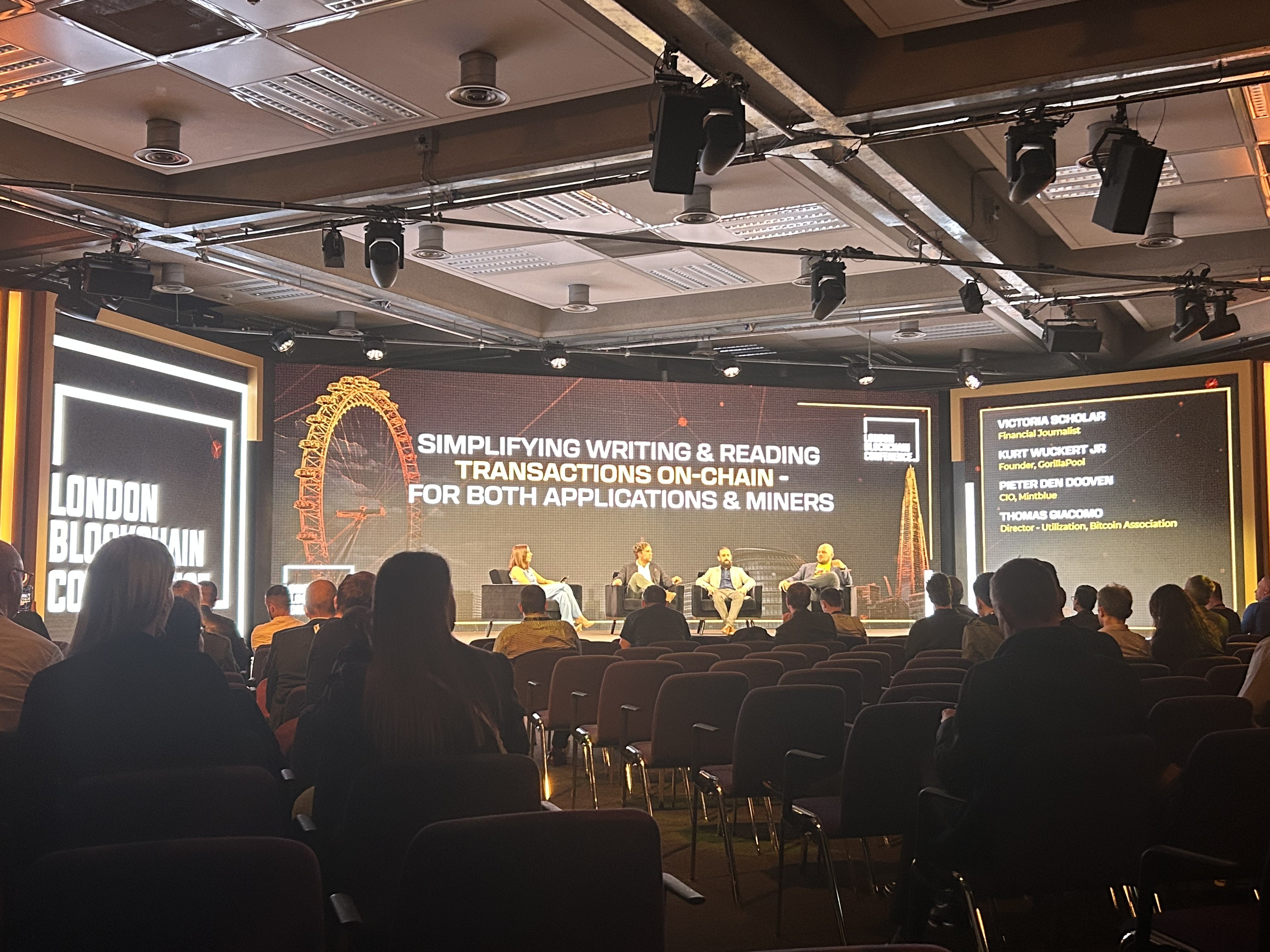
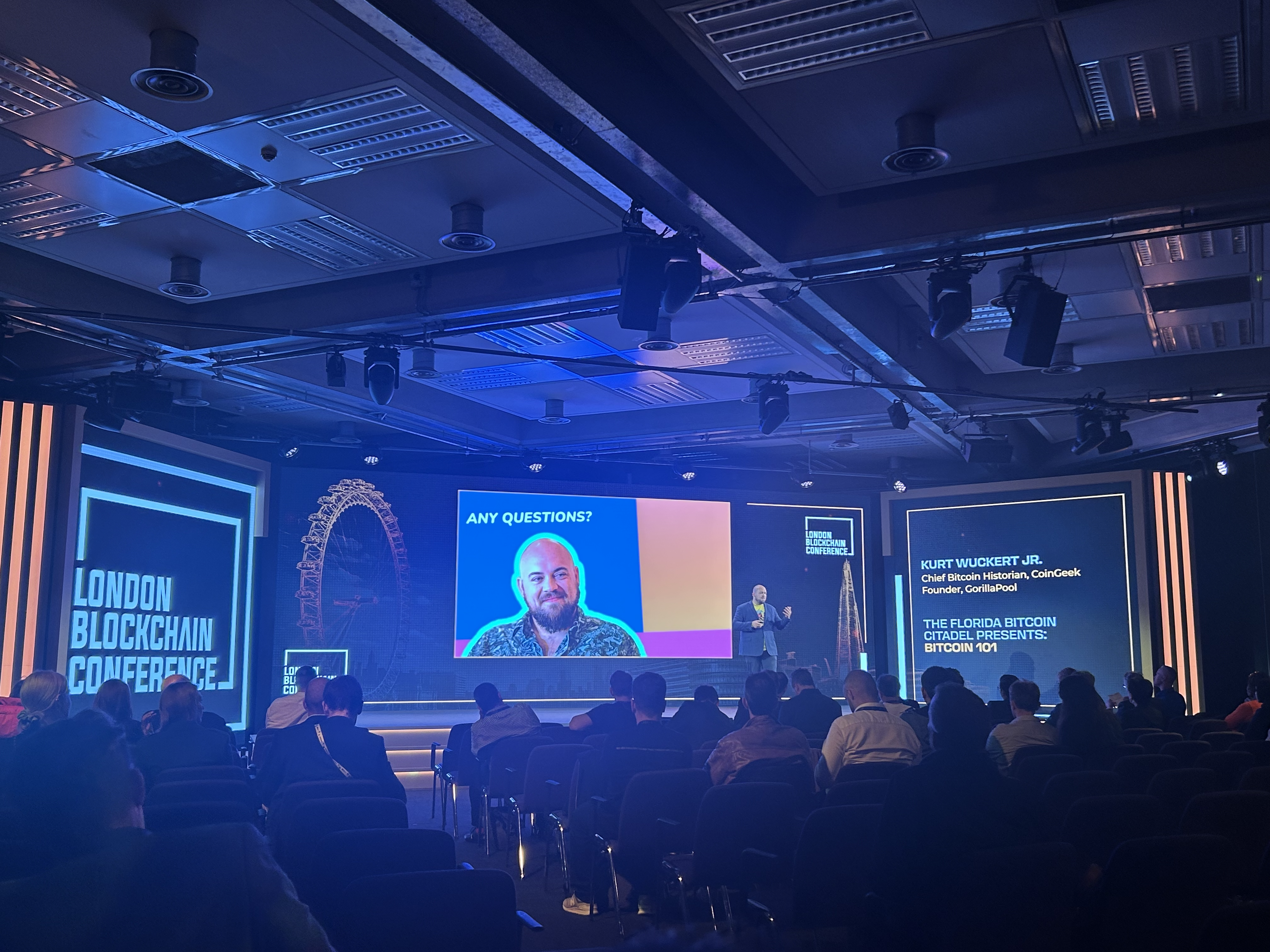
London Blockchain Conference 2023

Last week I went to the London Blockchain Conference 2023 and was brilliant ! It provided a wealth of information, discussions, and real-world examples of how blockchain technology can drive innovation, improve trust (Specially with AI coming – Infocalypse), and transform various industries.

Some of the highlights over its three days were:

Day 1:

  • The conference opened with nChain Group CEO Christen Ager-Hanssen posing a question about the purpose of blockchain, eliciting answers ranging from profit to education and business.
  • Discussions focused on showcasing the potential of scalable and lawful blockchain technology to generate revenue.

Day 2:

  • The concept of improving trust with blockchain technology was the central theme of the day.
  • Keynote speaker Peter Schiff talked about how “digital gold” could replace fiat currencies like the dollar, emphasizing the role of blockchain in enabling this transition.
  • Presentations from the Philippines highlighted the country’s digital transformation efforts, including partnerships between government agencies and private companies like nChain.

Day 3:

  • The focus was on driving innovation with blockchain technology and looking towards the future.
  • Projects demonstrating real-world use cases for blockchain were showcased, such as the United Nations World Food Program’s “Building Blocks” project and Gate2Chain’s Trace application for supply chain traceability.
  • Code-along sessions provided practical insights on building blockchain-powered applications, and there was a keynote presentation by nChain Chief Scientist Dr. Craig Wright on leveraging blockchain for business efficiency and cost reduction.

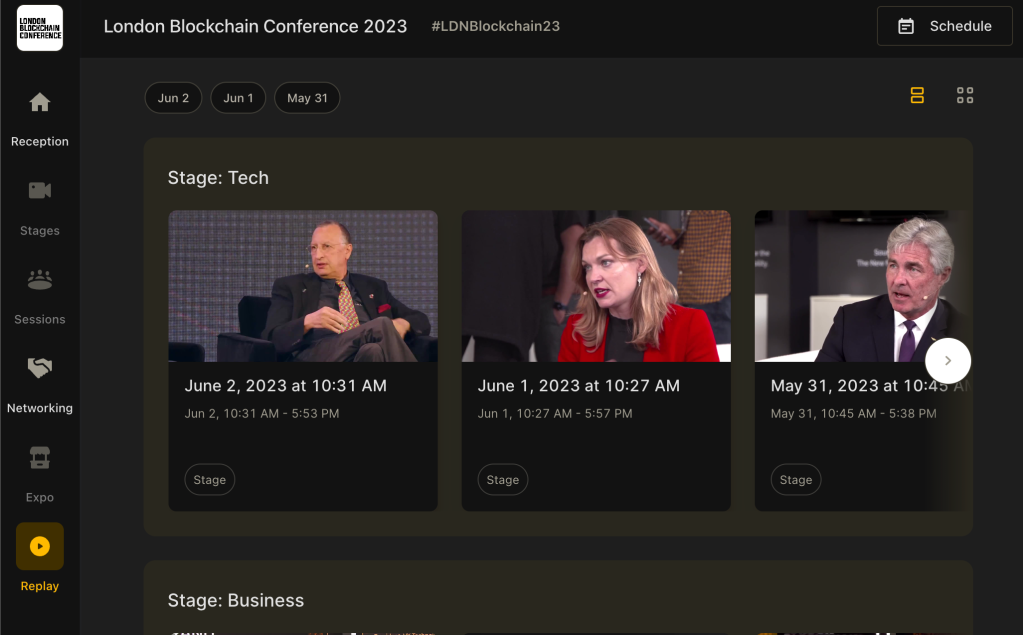
It might be over, but you can still catch up on content you missed by viewing recordings from the event! You will need to register before but then you can access the past event that is going to be available for 1 year.

Are you considering a career change or a move to a new country?

Hello guys,

Today it is going to be a different post, not as technical as the other ones, but I saw the need to share some inspirational story. It can be a daunting and overwhelming decision to move to another career like QA or another country, but it can also be an exciting opportunity to pursue your dreams and create a better life for yourself.

I have interviewed Jeferson who have made the leap to a career in Quality Assurance (QA) and moved to Canada from Brazil. His experience can provide valuable insights and encouragement for anyone considering a similar path. (Which I also have gone through the same 10 years ago 🙂)

Can you tell us about your experience moving from Brazil to Canada? 

I first came to Canada at the end of 2015 with the intent of getting fluent in English while having an experience of living in a different country, which was my first time I was going to be outside Brazil.

What motivated you to make the move? 

Brazil’s economy got worse and I had no perspective of getting a job returning to Brazil, so I decided to stay in Canada and try something new.

What led you to transition from your previous career to a career in Quality Assurance? 

Back In Brazil I was a Occupational Health and Safety Engineer working as Mechanical Designer, and I found myself with a hard path in front of myself if I decided to remain in the same field here, in a nutshell I’d have to start everything from scratch, doing a 4-year degree and it’d cost an amount of money I didn’t have. So with some eye opening inputs from friends, I decided to embark on a new challenge and get into tech, which my initial intent was to become a Software Developer working with Virtual Reality.

After graduating the Computer Systems Certificate Program I got my first job as a QA Engineer, where 90% of the time I was doing something else and only 10% of the time I worked as a tester, which was mainly manual regression testing and I hated, excepting for one project I worked on to create the Test Automation in Selenium. I was not happy with the job and found an opportunity in another company ( my current one) as an SDET (Software Developer Engineer in Test) which I only applied to get to a bigger company and transition to a Software Developer role within the company. In this company, I was presented, by my manager, a whole new testing world, where was not unstructured manual testing where I was just navigation through the system in the hopes of finding bugs, instead the approach here is to use critical thinking to do risk analysis and invest time and effort where it matters to improve the product, and go beyond ACs (Acceptance Criteria) to see where the system can brake and thus to a job that matters, is exciting and with very little boundaries on where to go. This new approach of testing made me get excited and want to become a professional in testing where I could code, explore and contribute to shape a better product by using a wide range of skills.

How did you prepare yourself for the transition into QA? 

I did a Computer Systems Certificate Program to learn how to code which led me to my first job opportunity in QA, even though I knew almost nothing about testing I was given a chance to step into this field. In this job I didn’t do much testing , but I got to work on a project to create the Test Automation in Selenium for the company, which was essential to get my second and current job, and here I really work in testing.

In a nutshell my preparation was the 2-years part-time certification course to learn programming and the Selenium project I worked on in my first job.

Did you take any courses or obtain any certifications? 

I did some courses on programming but none focused on testing, all I learned about testing (besides unit testing) I learned on the job. I’m currently seeking the ISTQB Foundation Certification to grow as a professional.

What aspects of your previous career do you think have helped you in your current role as a QA professional? 

The skills I acquired from being an Occupational Health and Safety Engineer and a Mechanical designer really helped me in my QA role. Among them, risk assessment and management came in handy when analyzing where to put efforts on testing and tackle areas where big issues can come up, also problem-solving skills, attention to detail and critical thinking were essential to excel in this field. So even though I didn’t have proper training to work in QA, I already knew where to look for issues, analyze what could lead to an issue and how to prioritize efforts.

Can you walk us through a recent project you worked on as a QA professional? 

Recently we upgraded an existing old feature to meet the business needs. It’s an import tool where a list in an excel file is provided and based on the file rows and rules in place, we manage the users by creating, updating, deactivating or reactivating them.

How did you approach it and what was your role? 

I was responsible for the test design and test approach. I started by doing a combinatory approach to discover the possible exception and happy paths to prevent redundant testing, and bring more value to the test suite with lower runtime.
Based on the information gathered in the combinatory approach, we analyzed all existing tests to remove what was no longer valid and refactoring the tests that were still relevant and create new tests for remaining uncovered scenarios.

In your opinion, what is the most important skill for a QA professional to have? 

Problem-solving and critical thinking: We should be able to analyze complex system problems and answer the question “Where and how can this break?”. Rarely the issues are in the acceptance criterias / requirements, everyone is looking at it already, the issue comes from other places, like non-written requirements, where something is expected to behave in a certain way, for a common sense perspective, and it was not written down, so people will not pay much attention it, but it’s expected to comply to it, other common places to fail are integration, where both sides work perfectly on their own, but brake when put together.

How do you stay up to date with industry trends and developments in QA? 

In the company we have a QA Guild where we constantly present trends and new approaches to testing. Besides that, I use the feature I’m working at the moment to google how other people are approaching the same problems and recently using chatGPT for ideas and explanations.

Finally, what advice would you give to someone considering a move to Canada and a career change to QA?

Whether you’re moving to a new country or starting a job in QA, a certain mindset is required for success. To thrive in these situations, it’s important to have an open mind and be willing to embrace challenges. Try new approaches, develop critical thinking skills, and don’t be afraid to question what others tell you. Remember that everyone’s experience is different, and there is no single “right” way of doing things. Instead, focus on what works for you and be willing to take chances along the way.

Hope this story gives more support to people that are transitioning into the QA career or moving to another country as well.

If you want to contact Jeferson, feel free to send him a message on Linkedin 😁

Thanks again for sharing this Jeferson 🙌🙌

Managing and achieving goals

Photo by Breakingpic on Pexels.com

Hello guys !

I saw my dear friend @mcruzdrake‘s last post and decided to join her on this Bloggers Club January 2021 😃

This month I’ve completed 10 years blogging, time flies! I can’t believe that I used to blog about investments and economy as well, another subject that I love.

So here I am, after 10 years. I slowed down a lot last year, I used to post every week non-stop for so many years and last year due to to other priorities I started posting monthly. This year I still have other priorities, but will plan ahead and see what is possible.

Those other priorities included some meetups, presentations, courses and I even had to deal with my boiler exploding! So I was completely drained in the end of the year.

My plan for this year is going back to post on this blog every 2 weeks, take my British citizenship, continue with my STEM Ambassador activities, continue active on the QA community, continue exercising and eating healthy and finally play drums every week again.

Here it is what I use to help me to organise myself:

Google Calendar

Photo by Olya Kobruseva on Pexels.com

This is helping me a lot, every time I receive an email or something that I need to solve but not now, I just create an event and that’s it, I don’t need to think about remembering or checking, I receive a notification as soon it is due.

I create recurrent events for example, prep meals for the week or study X or Y, so they help me to keep going. I also send emails to myself to remember about something that I need to do as soon as possible, but for that to work you need to have a clean inbox, otherwise you will end up with loads of unfinished things.

White Board

Photo by Jeswin Thomas on Pexels.com

I bought a white board to write and plan things that are a bit more complex, or just to help my mind to focus on the big picture of the next achievements. It helps when you have something to look forward to and get you excited and makes you get a bit of discipline.

The last one that is not a tool is actually an action. It changed my routine completely: Getting out of social media, not all of them of course. I am still on Twitter and Linkedin, but all of the others were just draining my time when I was bored and I found myself opening these apps out of impulse. Now I am connected with people that really matter to me.

Celebrating Ada Lovelace Day !

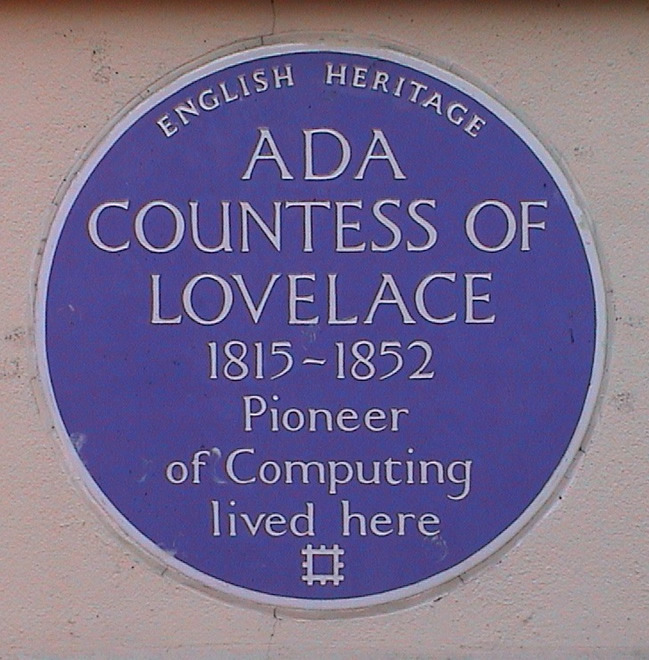
Ada Lovelace : London Remembers, Aiming to capture all memorials in London
Ada Lovelace house’s plaque in London

Today we are celebrating Ada Lovelace Day !!

Ada Lovelace was an english mathematician and is recognised as “the first computer programmer” due to the creation of an algorithm for a computing machine in the mid-1800s. She was one of my first inspirations after my parents and my oldest brother to come to the Technology area.

Her childhood background also resembles mine, she had ability with math since little, focused on studying as much as possible and not having a father figure when little ! She is a truly inspiration to me and hopefully to many other women out there.

The Ada Lovelace Day was created in 2009 by Suw Charman-Anderson and it is now held every year on the second Tuesday of October. It is an international celebration of the achievements of women in science, technology, engineering and maths (STEM). The goal of this celebration is to motivate and bring more women in STEM, creating new role models and support women already working in this area.

You can find more about this day and how to support here: https://findingada.com/

Hiring and Onboarding a QA

Hello everybody !!!

I am super excited to share here my debut meetup and as it was an online event consequently was also my first international talk !!

Thanks everybody for the support and the feedbacks (glad that was useful for so many people). It was a great experience and I will definitely do this more often 🙂


Check the slides here

Thank you !!

Lead your Team Through the Crisis

I’ve recently watched a webinar about how to lead and communicate better with your team during this world crisis. Everybody is dealing in a different way and some of us are struggling in this unprecedented time of lockdown. I particularly work much better at home and without the distractions of the office, but not everybody is the same.

R. Michael Anderson talks about mental health during this COVID-19 and how we can overcome the issues and communicate better, you can watch the meetup recording below.

He shares his views and real life experience on: 

  • The systems and processes you need to not just survive, but to thrive over the next few months.
  • That real reason leaders cave under the pressure of a crisis…and how to not be one of those casualties.
  • What exactly your team needs from you right now, and how to give that to them.
  • How to find another level of leadership within yourself in just a few quick steps.
  • AND how to do all of this right away so that you and your team perform at a high level when it’s needed the most.


One of the suggestions is to apply the DiSC assessment, which I am going to talk a bit deeper here. You can use it to help team members better understand each other and what is the way they prefer to communicate. Doing that you can improve the workplace and it can become a more productive and comfortable environment.

The whole point of this kind of test is to build emotional intelligence between its members, personal growth and self awareness. Reminding each other that we’re all human beings (not machines) with different perspectives, plans, experiences, and skills. This understanding is essential and helps teams to perform better and feel like a team avoiding a blaming/competitive culture.

When letting the team members know about the test, it’s important they understand it’s strictly a tool to understand each other better and work well together. There are no right or wrong answers !

By taking the personality assessment test and then reviewing the results together, the team will learn more about the other members and also themselves, noticing what is the best way to interact with each other.

The DiSC model organizes personalities among four quadrants, with people usually being dominant in one of them:

  • dominance, an emphasis on accomplishing results
  • influence, an emphasis on relationships and influencing others
  • steadiness, an emphasis on cooperation and dependability
  • conscientiousness, an emphasis on quality, accuracy and competency

Results from the DiSC model are presented on a circle, with a dot in one of the quadrants, so test takers can see where their personality lies and identify how much of each quadrant is relevant to them. Keeping track of the results can help everybody to better evaluate conflicts, recognize high performers and address communication issues on teams.

According to this detailed analysis from EQ experts Dr. Vanessa Druskat and Dr. Steven Wolff:

“Our research tells us that three conditions are essential to a group’s effectiveness: trust among members, a sense of group identity, and a sense of group efficacy.”

Here it is an example of a DiSC assessment:

This also reminds me of the “benefits” the companies offer: fruits in the office, table football, ps 4, bonus and the list goes on… When the only thing you want is to be able to work from home to stay with your dog and go to your local pub while it is still sunny.

It is impossible to make everybody happy, so it is better if you can understand what motivates EACH one of the team members instead of pushing things they don’t want/care.

You can take the personality test for free and understand more about yourself and how to better communicate with others here: https://www.truity.com/test/disc-personality-test


Resources:

https://www.tonyrobbins.com/disc/

https://www.paycom.com/resources/blog/how-to-use-personality-assessment-tests-to-improve-workplace-culture-and-communication/

https://blog.trello.com/personality-tests-for-teams-at-work