
The London Blockchain Conference 2024 was an event at ExCel London from 21-23 May 2024 and showed the vast potential of blockchain technology across various industries and applications. And here are my takeaways from the conference and the talks I joined:
Asset Tokenization
- Tokenization refers to the process of converting real-world assets, such as real estate, art, or collectibles, into digital tokens on a blockchain network.
- This enables secure and transparent trading of these assets, opening up new opportunities for investment and ownership.
AI Responsibility and Auditing
- As artificial intelligence (AI) systems become more advanced, there is a growing need to ensure they operate responsibly and without bias.
- The conference explored ways to establish acceptance criteria for AI responsibility and leverage blockchain technology to audit AI systems, ensuring transparency and accountability.
Blockchain and AI Integration
The integration of blockchain and artificial intelligence (AI) technologies holds immense potential for creating decentralized, transparent, and trustworthy AI systems. Here are some real-world use cases:
- AI Responsibility and Auditing: Blockchain can be used to audit AI systems, ensuring transparency and accountability. AI models, training data, and decision-making processes can be recorded on the blockchain, enabling auditing for bias, fairness, and compliance with regulations.
- Decentralized AI: By combining blockchain and AI, it is possible to create decentralized AI systems where the AI model is trained and deployed across a network of nodes, rather than being controlled by a single entity. This can increase trust, transparency, and democratize access to AI capabilities.
- AI-powered Supply Chains: AI and blockchain can be integrated to optimize supply chain operations. AI can analyze data from IoT sensors and blockchain can provide a tamper-proof record of transactions, enabling end-to-end visibility and automation.
Blockchain Use Cases
The conference highlighted various real-world applications of blockchain technology, including:
- Food Supply Safety and Traceability: Blockchain can provide an immutable record of the entire food supply chain, from farm to table. This enables tracking of food products, ensuring safety, and identifying the source of contamination or quality issues.
- Supply Chain Management and Logistics: Blockchain can streamline supply chain operations by providing a transparent and secure record of transactions, reducing paperwork, and enabling real-time tracking of goods.
- Pharmaceutical Record-keeping and Drug Traceability: The pharmaceutical industry can leverage blockchain to maintain secure and tamper-proof records of drug manufacturing, distribution, and dispensation, preventing counterfeit drugs and ensuring patient safety.
- Financial Services: Blockchain is being explored for applications such as cross-border payments, trade finance, and securities settlement, enabling faster and more secure transactions while reducing costs and intermediaries.
- Identity Management: Blockchain-based identity management systems can provide individuals with control over their personal data, enabling secure and privacy-preserving sharing of identity information.
Quantum-Resistant Blockchain
- With the potential threat of quantum computing to current cryptographic systems, the conference explored ways to make blockchain networks like Bitcoin resistant to quantum attacks, ensuring the long-term security of digital assets.
Private vs. Public Blockchains
- Private Blockchains:
✅ Pros: Better control over network participants, increased transaction throughput, and enhanced privacy.
❌ Cons: Centralized control, reduced transparency, and potential for censorship. - Public Blockchains:
✅ Pros: Decentralized and transparent, no central authority, increased security through distributed consensus.
❌ Cons: Lower transaction throughput, potential for anonymity abuse, and lack of control over network participants.
The decision to use a private or public blockchain depends on factors such as the level of trust required, the need for transparency or privacy, and the desired level of control over the network.
Consensus Mechanisms
Consensus mechanisms are essential for ensuring agreement and trust among nodes in a blockchain network. Here’s an overview of the consensus mechanisms that were mentioned during one of the talks I joined:
- Proof of Work (PoW): Nodes compete to solve complex mathematical puzzles, and the winner gets to add the next block to the chain and earn a reward. Used in Bitcoin and Ethereum (currently).
- Proof of Stake (PoS): Instead of computational power, nodes stake their cryptocurrency holdings to validate transactions and earn rewards. More energy-efficient than PoW.
- Proof of Authority (PoA): A reputation-based mechanism where pre-approved nodes validate transactions based on their identity.
The choice of consensus mechanism depends on factors such as decentralization, scalability, energy efficiency, and the level of trust required in the network.




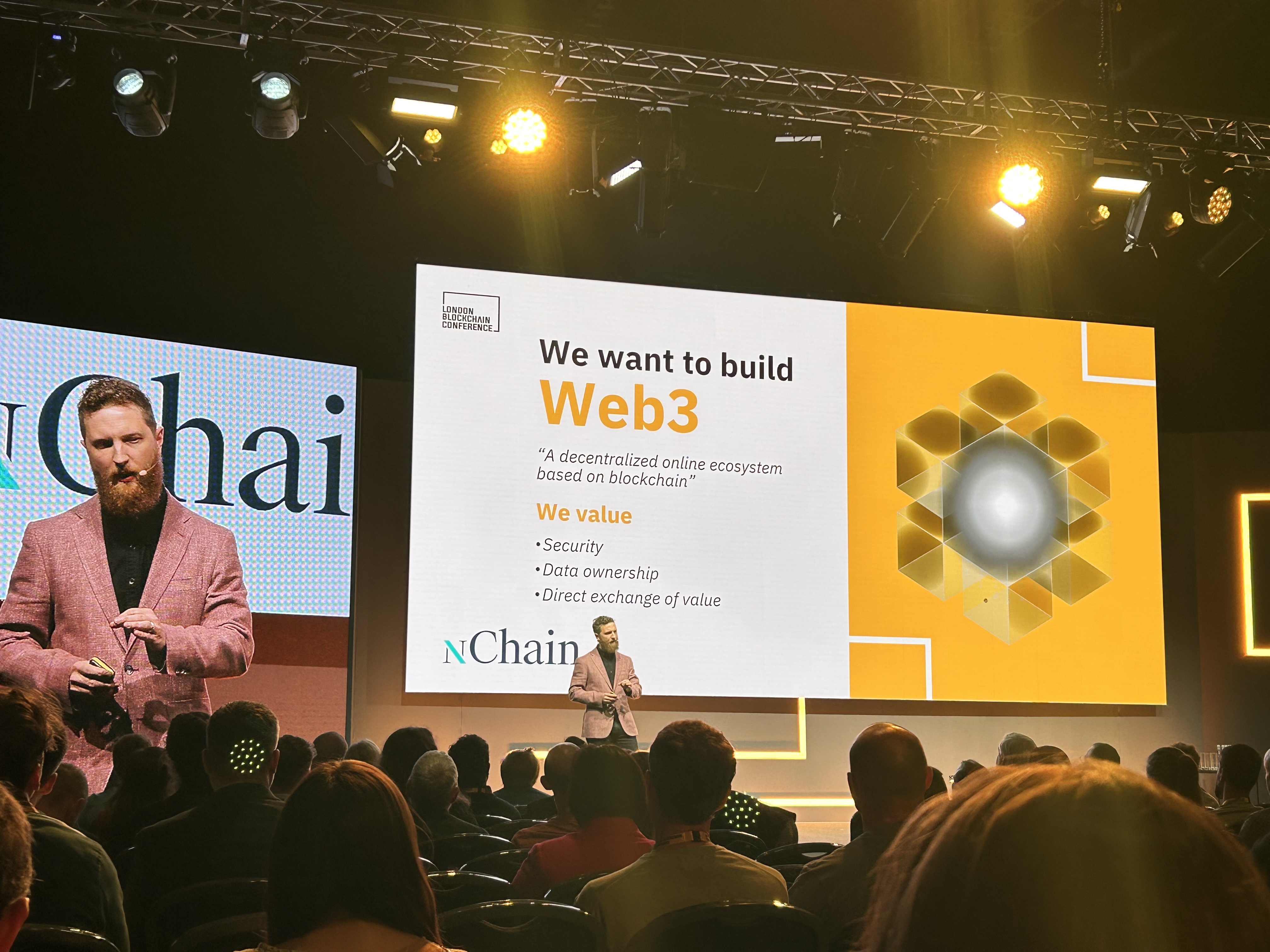
Sad that was over, but the London Blockchain Conference 2024 showcased the transformative potential of blockchain technology across various industries and applications, from asset tokenization and AI responsibility to supply chain management and quantum-resistant blockchain networks.
Learned so much, these conferences always make me see things with other perspectives and also update myself, see what others are doing and how to solve some problems.

See you all next year 👋





















 Rafaela Azevedo