Second script with Velocity (VM)

Hi guys, Today I will post another example of VM template, sorry for not to post something new, but I’ve got flu this week, I am feeling like a zombie 😦

This example is more complete and I have tested, so it is working 😀 I just made some changes to print the result with the values and the template. We have get and set methods, the vm template in html and the class to set the values and merge the template.

– Create the get and set customer class:

package test;
public class Customer {

    String customerNumber;
    String name;
    String address;
    String city;
    String state;
    String zip;
    String phone;

    public String getCustomerNumber() {return customerNumber;}
    public void setCustomerNumber(String s) {customerNumber = s;}
    public String getName() {return name;}
    public void setName(String s) {name = s;}
    public String getAddress() {return address;}
    public void setAddress(String s) {address = s;}
    public String getCity() {return city;}
    public void setCity(String s) {city = s;}
    public String getState() {return state;}
    public void setState(String s) {state = s;}
    public String getZip() {return zip;}
    public void setZip(String s) {zip = s;}
    public String getPhone() {return phone;}
    public void setPhone(String s) {phone = s;}
}

– Create a customer search class which will set the values and merge with the template:

package test;
import org.apache.velocity.Template;
import java.io.StringWriter;
import org.apache.velocity.app.Velocity;
import org.apache.velocity.VelocityContext;
import test.Customer;

public class CustomerSearch  {
    
    public static void main(String[] args) throws Exception { 

     CustomerSearch cs = new CustomerSearch(); 

     StringWriter writer = cs.getTemplate(); 
     System.out.println(writer.toString());
    }
    public StringWriter getTemplate()  {

        Template template = null;
        StringWriter writer = new StringWriter();
        Customer customer = getCustomer();
        
        VelocityContext context = new VelocityContext();
        try  {
            context.put("customer", customer);
            template = Velocity.getTemplate("src/customer.vm");
            template.merge(context, writer); 
        }  catch( Exception e )  {
          System.err.println("Exception caught: " + e.getMessage());
        }

        return writer;
    }

    private Customer getCustomer()  {
        Customer customer = new Customer();
        customer.setCustomerNumber("ABC123");
        customer.setName("Joe JavaRanch");
        customer.setAddress("123 Rancho Javo");
        customer.setCity("Bueno Ranch");
        customer.setState("CO");
        customer.setZip("63121");
        customer.setPhone("303-555-1212");
        return customer;
    }
}

– After, create the vm template html:

<html>
<head><title>Customer Search Results - $customer.customerNumber</title></head>
<body bgcolor="#faf7f1">
    <h1>Customer information for customer number $customer.customerNumber</h1>
    <b>Name:</b> $customer.name<br>
    <b>Address:</b> $customer.address<br>
    <b>City:</b> $customer.city<br>
    <b>State:</b> $customer.state<br>
    <b>Zip:</b> $customer.zip<br>
    <b>Phone:</b> $customer.phone<br>
</body>
<html>

Cheers guys !

Source:

http://velocity.apache.org/engine/devel/developer-guide.html

https://velocity.apache.org/engine/releases/velocity-1.5/webapps.html

http://www.javaranch.com/journal/2004/03/Velocity-AnIntroduction.html

http://www.javaworld.com/article/2075966/core-java/start-up-the-velocity-template-engine.html
First script with Velocity (VM)

Velocity is a Java-based template engine. It permits web page designers to reference methods defined in Java code. Basically, you can create files (HTML, XML, etc…) writing scripts and generate them following a template.


– Create Maven Project.

– Add dependency in your pom file – Change the version of the lib:

<dependency>

  <groupId>org.apache.velocity</groupId>

  <artifactId>velocity</artifactId>

  <version>1.6.4</version>

</dependency>


– Create a Vm template, like this one. Save as .vm (I created outside the package test). So, place your template in Project > src > customer.vm and not with the code which the structure is: Project > src > package.test:

Hello $word! This is your first Velocity script !


– Create a Java Class called CreateScript:
import java.io.StringWriter;

import org.apache.velocity.app.VelocityEngine;
import org.apache.velocity.exception.MethodInvocationException;
import org.apache.velocity.exception.ParseErrorException;
import org.apache.velocity.exception.ResourceNotFoundException;
import org.apache.velocity.Template;
import org.apache.velocity.VelocityContext;

public class createXml {
   public static void main(String[] args) throws Exception {
   VelocityEngine ve = new VelocityEngine();
   ve.init();

   try {
    Template t = ve.getTemplate("src/helloworld.vm");

    VelocityContext context = new VelocityContext();
    context.put("word", "World");
    StringWriter writer = new StringWriter();
    t.merge(context, writer);
    System.out.println(writer.toString());
    } catch (ResourceNotFoundException rnfe) {
      System.out.println("Couldn't find the template");
    } catch (ParseErrorException pee) {
      System.out.println("syntax error: problem parsing the template");
    } catch (MethodInvocationException mie) {
      System.out.println("something invoked in the template");
      System.out.println("threw an exception");
    } catch (Exception e) {
    }
  }
}

– Vm file is the template, you will create the template and what the variables that will have the value that you want.

– Inside Java Class:

You need initialize the Velocity API – Write the path of the vm template – Initialize the context and write all the variables and the values (name – variable, word – value) – Initialize the Writer which will render the template – Merge the context and the values creating the template – Show the result

– To run the project, first I had to compil with maven test and after this I just choose Run As – Java Application.

So, this is the first script, I will write more about, but between this you can have a look on the links below. See you guys 🙂


Sources:

http://velocity.apache.org/engine/devel/developer-guide.html

https://velocity.apache.org/engine/releases/velocity-1.5/webapps.html

http://www.javaranch.com/journal/2004/03/Velocity-AnIntroduction.html

http://www.javaworld.com/article/2075966/core-java/start-up-the-velocity-template-engine.html

Configure Thucydides (Report for JBehave) – BDD

What is ?

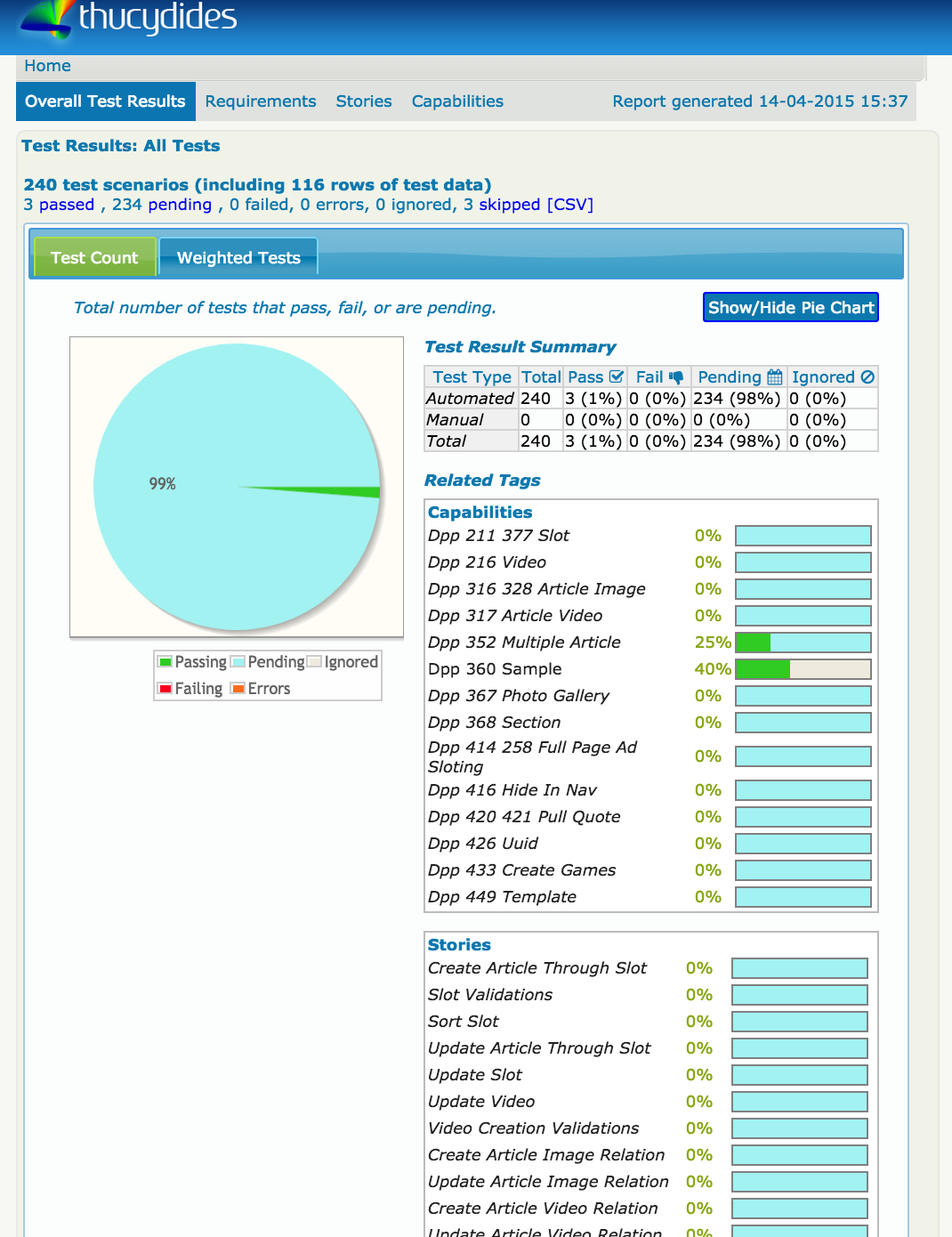
Basically, this report of your scenarios/features:

Screen Shot 2015-06-17 at 12.34.50


Project Structure

+ src
   + main
      + java
         + com.mycompany.pages
            - HomePage.java   

   + test
      + java
         + com.mycompany.pages
            + requirements
               - Application.java
            + steps
               - EndUserSteps.java
            - SearchByKeywordStoryTest.java 

      + stories
         + com.wakaleo.webtests.wikipedia
            - SearchingForCats.story


Starting

If you have maven installed, go to the terminal or IDE and:

– Create a new project:

mvn archetype:generate -Dfilter=thucydides

– Open your settings.xml and write:

<?xml version="1.0" encoding="UTF-8"?>
<settings>
   <pluginGroups>
       <pluginGroup>net.thucydides.maven.plugins</pluginGroup>
  </pluginGroups>
</settings>

– In the pom.xml file, update the default JUnit dependency to at least 4.11

– Add a dependency to hamcrest-all and thucydides-junit. Thucydides uses SLF4J for its logging, so add an SLF4J implementation (e.g. slf4j-simple) as well.

– If you are not using Maven 3, make sure you configure the Maven compiler plugin to use Java 5.

– Finally, add the thucydides-maven-plugin, which provides the Thucydides reporting services. The resulting pom.xml file should look something like this:


  <groupId>com.wakaleo.webtests.wikipedia</groupId>
  <artifactId>wikipediawebtests</artifactId>
  <version>1.0-SNAPSHOT</version>
  <packaging>jar</packaging>

  <name>wikipediawebtests</name>
  <url>http://maven.apache.org</url>

    <properties>
        <project.build.sourceEncoding>UTF-8</project.build.sourceEncoding>
        <thucydides.version>0.9.228</thucydides.version>
    </properties>

    <dependencies>
        <dependency>
            <groupId>junit</groupId>
            <artifactId>junit</artifactId>
            <version>4.11</version>
        </dependency>
        <dependency>
            <groupId>org.hamcrest</groupId>
            <artifactId>hamcrest-all</artifactId>
            <version>1.1</version>
        </dependency>
        <dependency>
            <groupId>net.thucydides</groupId>
            <artifactId>thucydides-junit</artifactId>
            <version>${thucydides.version}</version>
        </dependency>
        <dependency>
            <groupId>org.slf4j</groupId>
            <artifactId>slf4j-simple</artifactId>
            <version>1.6.1</version>
            <type>pom</type>
        </dependency>
    </dependencies>
    <build>
        <plugins>
            <plugin>
                <groupId>org.apache.maven.plugins</groupId>
                <artifactId>maven-compiler-plugin</artifactId>
                <version>2.3.2</version>
                <configuration>
                    <source>1.5</source>
                    <target>1.5</target>
                </configuration>
            </plugin>
            <plugin>
                <groupId>net.thucydides.maven.plugins</groupId>
                <artifactId>maven-thucydides-plugin</artifactId>
                <version>${thucydides.version}</version>
            </plugin>
        </plugins>
    </build>
</project>                      


– Run this command to be sure that everything it is running correctly: mvn package

– Create a new class contains the list of “features” that make up the application, and stories related to each feature. These stories are not the tests themselves – rather they are used to model the application requirements.

– Writing your first test:

public class Application {
	    @Feature
	    public class Search {
	        public class SearchByKeyword {}
	        public class SearchByAnimalRelatedKeyword {}
	        public class SearchByFoodRelatedKeyword {}
	        public class SearchByMultipleKeywords {}
	        public class SearchForQuote{}
	    }

	    @Feature
	    public class Backend {
	        public class ProcessSales {}
	        public class ProcessSubscriptions {}
	    }

	    @Feature
	    public class Contribute {
	        public class AddNewArticle {}
	        public class EditExistingArticle {}
	    }
	}


– Create a new test class in a package of your choice calledSearchByKeywordStoryTest.java

@Story(SearchBySingleKeyword.class)
@RunWith(ThucydidesRunner.class)
public class SearchByKeywordStoryTest {

    @Managed(uniqueSession = true)
    public WebDriver webdriver;

    @ManagedPages(defaultUrl = "http://www.wikipedia.com")
    public Pages pages;

    @Steps
    public EndUserSteps endUser;

    @Test
    public void should_display_article_about_cats() {
        endUser.is_on_the_wikipedia_home_page();
        endUser.searches_by_keyword("cats");
        endUser.should_see_article_with_title("Cat - Wikipedia, the free
 encyclopedia");


PS: @Managed and  @ManagedPages are required to take care of our page objects.


– Create a step library called EndUserSteps:

public class EndUserSteps extends ScenarioSteps {

    public EndUserSteps(Pages pages) {
	super(pages);
    }

    @Step
    public void searches_by_keyword(String keyword) {
        enters(keyword);
        performs_search();
    }

    @Step
    public void enters(String keyword) {
    }

    @Step
    public void performs_search() {
    }

    @Step
    public void should_see_article_with_title(String title) {
    }

    @Step
    public void is_on_the_wikipedia_home_page() {
    }
}


– You will need create your own classes inside of each Step.

– Run the command to generate your report: mvn verify thucydides:aggregate

– Your report will be in target/thucydides directory, open the home.html


If you want to see a complete model, go to this link.

If you want to learn more about maven commands, go to this link.

If you want to see the post of John Smart with his complete example, go to this link.


Thank you guys  🙂


Sources:

https://github.com/thucydides-webtests/thucydides/wiki/Getting-Started

https://weblogs.java.net/blog/johnsmart/archive/2011/10/31/getting-started-thucydides-%E2%80%93-using-thucydides-maven-archetypes

http://stackoverflow.com/questions/23297718/thucydides-install-from-scratch-archetype-all-tests-are-skipped

http://maven.apache.org/guides/introduction/introduction-to-the-lifecycle.html

https://github.com/thucydides-webtests/thucydides-demos

Functional Programming

What is functional programming?  Everything is a mathematical function. Functional programming languages can have objects, but generally those objects are immutable — either arguments or return values to functions. There are no for/next loops, as those imply state changes. Instead, that type of looping is performed with recursion and by passing functions as arguments.

Functional programming requires that functions are first-class, which means that they are treated like any other values and can be passed as arguments to other functions or be returned as a result of a function. Being first-class also means that it is possible to define and manipulate functions from within other functions. Special attention needs to be given to functions that reference local variables from their scope. If such a function escapes their block after being returned from it, the local variables must be retained in memory, as they might be needed later when the function is called.

The following table shows which languages support functional programming (by supporting first-class functions) and for which the functional style is the dominant one.

Language Closures Functional
C No No
Pascal No No
C++ Yes No
Java Yes No
Modula-3 Yes No
Python Yes No
Ruby Yes No
Javascript Yes Yes
Ocaml Yes Yes
Erlang Yes Yes
Haskell Yes Yes

Benefits

Functional programming is known to provide better support for structured programming than imperative programming. It is easy, for instance, to abstract out a recurring piece of code by creating a higher-order function, which will make the resulting code more declarative and comprehensible.

Functional programs are often shorter and easier to understand than their imperative counterparts. Since various studies have shown that the average programmer’s productivity in terms of lines of code is more or less the same for any programming language, this translates also to higher productivity.

Look the difference:

Class using C and object-oriented:

public static class SumOfSquaresHelper
{
   public static int Square(int i)
   {
      return i * i;
   }

   public static int SumOfSquares(int n)
   {
      int sum = 0;
      for (int i = 1; i <= n; i++)
      {
         sum += Square(i);
      }
      return sum;
   }
}

Does the same thing using Functional programming:

let square x = x * x
let sumOfSquares n = [1..n] |> List.map square |> List.sum

Object-oriented x Functional languages

When you anticipate a different kind of software evolution:

  • Object-oriented languages are good when you have a fixed set of operations on things, and as your code evolves, you primarily add new things. This can be accomplished by adding new classes which implement existing methods, and the existing classes are left alone.
  • Functional languages are good when you have a fixed set of things, and as your code evolves, you primarily add new operations on existing things. This can be accomplished by adding new functions which compute with existing data types, and the existing functions are left alone.

When evolution goes the wrong way, you have problems:

  • Adding a new operation to an object-oriented program may require editing many class definitions to add a new method.
  • Adding a new kind of thing to a functional program may require editing many function definitions to add a new case.

I have been reading about what is functional programming on the last weeks (Just because I was curious) and I found a lot of articles, but I summarized here a little piece of each place which helped me to better understand what really is.

If you are interested about functional programming you can click on this link. I found it very interesting and easy to understand.

 See you next week !

Sourcehttp://www.javacodegeeks.com/2014/03/functional-programming-with-java-8-lambda-expressions-monads.html

http://www.functionaljava.org/

https://pragprog.com/magazines/2013-01/functional-programming-basics

http://programmers.stackexchange.com/questions/117276/example-of-where-functional-programming-is-superior-to-imperative-or-object-orie

http://c2.com/cgi/wiki?FunctionalProgramming

http://stackoverflow.com/questions/2078978/functional-programming-vs-object-oriented-programming

http://www.infoworld.com/article/2615766/application-development/functional-programming–a-step-backward.html?page=2

http://fsharpforfunandprofit.com/why-use-fsharp/

http://www.tryfsharp.org/Learn

Getting Started with Mobile Test Automation & Appium

Hi guys, today I have another Webinar that I participate about Appium, how to choose the automation mobile tool, how should be the structure, etc. You can watch online or download, just click in this link to start.

You can jump the advertisement moving to 00:10:51 of the video. Also, you can jump to 00:23:12 and watch the demo. To jump the demo go to 00:40:00.


Difference between hybrid native and html


Screen Shot 2015-05-27 at 20.39.45


HTML: web applications which runs in web browser.

Native: just native elements, apps which doesn’t have html elements.

Hybrid: mix of native elements and html elements.


Mobile QA Solutions


Screen Shot 2015-05-27 at 20.44.35

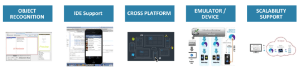
– How choose the automation tool ?

– Verify how you inspect the elements.

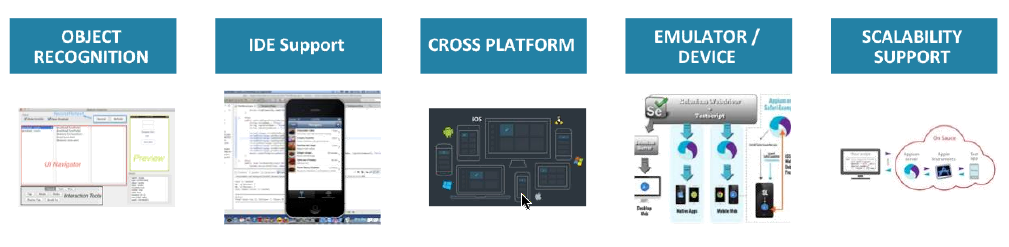
– Scalability, How many devices supports (IOS, windows phone, tablet, kindle, ipad, etc).

Integration with other tools like Jenkins, JIRA, etc.

Cloud, If this tool supports cloud tests (Amazon cloud, Sauce Labs, etc).

Automation Support, How long do you take to find the solution for some problem ? (Particularly, this is the most important for me )


Appium

Open source automation test automation framework for native, hybrid and mobile apps.


Supports:
Real devices, Simulators, Native Apps, Hybrid Apps, Mobile Web Apps (IOS and Android only).

Environment: Appium, Android Studio (Sdks) and Eclipse.

Screen Shot 2015-05-27 at 20.47.56

Setting parameters: App device, launch device, android setting (path of sdks).


Screen Shot 2015-05-27 at 20.49.03

Architecture, Blueprint: 

Screen Shot 2015-05-27 at 20.46.16

Screen Shot 2015-05-27 at 20.50.50

Make sure that you are doing right


Screen Shot 2015-05-27 at 21.14.19

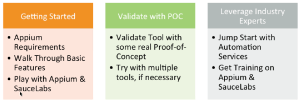
– Do some proof of concepts (The configuration it is the hard and most boring part for me).

– Share the right quantity of tests between emulators and devices.

– Distribute the right level of tests between unit (70%), integration (20%) and manual tests (10%).

– Remember that if you are using BDD, it is just 3 layers.

– Use CI since the beginning.

– Decide what must to have in the report.

– Considerate the language which the developers are using (You never know when you will need help).

Screen Shot 2015-05-27 at 21.18.30

Thank you guys ! See you next week 🙂

Source: link

Code example to catch url, Status code and time to load an url

Hi guys, today I will post a simple project that I did just to catch some information with Selenium and Java. So, I have a spreadsheet with some urls in the first column and when I run the project, it is being recorded the status code of the urls and how long is lasting to load this page in the following columns.

It is very simples. I know that there are many ways to do that and you don’t need to use selenium because will take more time to render the page and everything, but maybe someone is needing something similar. So, now the code and in the bottom the link to my project.

  • OPEN URL – Open the URL and write the StatusCode and the time to load the page in the following columns:
import jxl.read.biff.BiffException;
import org.openqa.selenium.WebDriver;
import java.io.File;
import java.io.FileInputStream;
import java.io.FileOutputStream;
import java.io.FileWriter;
import org.apache.poi.hssf.usermodel.HSSFWorkbook;
import org.apache.poi.ss.usermodel.Workbook;
import org.openqa.selenium.By;

public class OpenUrl {

    OpenDataBase opendatabase = new OpenDataBase();
    FileOutputStream fOut = null;

    public void OpenURL(WebDriver driver) throws BiffException, Exception {
        String tablename = ("tb");
        opendatabase.Open(tablename);
        File file = new File("BD.xls");
        int result = 0;
        String STR = "CRI -";
        int ARQ = 1;
        int WARNING = 2;
        int CRITICAL = 3;

        Workbook wb = new HSSFWorkbook(new FileInputStream(file.
getCanonicalPath()));

        for (int i = 0; i < opendatabase.sheet.getRows(); i++) {

            String url = opendatabase.sheet.getCell(0, i).getContents();

            double start = System.currentTimeMillis();
            driver.manage().window().maximize();
            driver.get(url);
            double finish = System.currentTimeMillis();
            double totalTime = finish - start;
            double totalTimeSec = totalTime / 1000;

            try {
                driver.findElement(By.xpath("/html/body/div/span[2]/ul/li/a")
).click();
            } catch (Exception e) {
                driver.findElement(By.xpath("/html/body/div/span/ul/li/a")
).click();
            }

            String titlepage = driver.getTitle().replace(" ", "");

            FileWriter fw = new FileWriter(titlepage + ".txt");
            int statusCode = Statuscode(driver.getCurrentUrl(), driver);
            String line = url + "," + totalTimeSec + "," + statusCode;

            fw.write(line);
            fw.close();


        }


    }

    public int Statuscode(String URLName, WebDriver driver) {
        try {
            int statuscode = Integer.parseInt(driver.findElement(By.xpath
("/html/body/div/span/span/pre[2]")).getText().substring(9, 12));
            return statuscode;
        } catch (Exception e) {
            e.printStackTrace();
            return 1;
        }
    }
}
  • OPEN DATABASE CODE – Read the columns in the Excel Spreadsheet:
import java.io.File;
import java.io.IOException;
import jxl.Sheet;
import jxl.Workbook;
import jxl.WorkbookSettings;
import jxl.read.biff.BiffException;

public class OpenDataBase{

    Sheet sheet;
    Workbook bdurl;
      
    public Sheet Open(String tablename) throws BiffException, IOException, 
Exception { 

        File file = new File("BD.xls");
            WorkbookSettings ws = new WorkbookSettings();
            ws.setEncoding("Cp1252");
            
            bdurl = Workbook.getWorkbook(new File(file.getCanonicalPath()), 
ws);             
            
            sheet = bdurl.getSheet(tablename);
            return sheet;
        }

    public void Close(Workbook bdurl) throws BiffException, IOException, 
Exception {

        bdurl.close();
    }
}


  • MAIN CLASS – statusCode:
import org.openqa.selenium.WebDriver;
import org.openqa.selenium.firefox.FirefoxDriver;
import org.openqa.selenium.firefox.FirefoxProfile;
import java.util.concurrent.TimeUnit;
import org.openqa.selenium.firefox.internal.ProfilesIni;
import org.openqa.selenium.remote.CapabilityType;
import org.openqa.selenium.remote.DesiredCapabilities;

public class statusCode {

    public static void main(String[] args) throws Exception {
        ProfilesIni profilesIni = new ProfilesIni();
        FirefoxProfile profile = profilesIni.getProfile("default");
        WebDriver driver = new FirefoxDriver(profile);

        DesiredCapabilities capabilities = new DesiredCapabilities();
        capabilities.setCapability(CapabilityType.ACCEPT_SSL_CERTS, true);
        
        profile.setPreference("browser.ssl_override_behavior", 1);
        profile.setPreference("network.proxy.type", 0);
        profile.setAcceptUntrustedCertificates(true);
        profile.setAssumeUntrustedCertificateIssuer(false);

        driver.manage().timeouts().implicitlyWait(5, TimeUnit.SECONDS);

        OpenUrl Openurl = new OpenUrl();
        Openurl.OpenURL(driver);
        
        driver.close();
        driver.quit();
    }
}

Thanks guys ! See you next week, if you have any questions, suggestion please feel free to comment below.

Sourcehttps://github.com/rafaelaazevedo/statuscode_nfe

When should I do End-to-End Tests ?

About End-to-End tests:

“Focus on the user and all else will follow”

  • Developers like it because it offloads most, if not all, of the testing to others.
  • Managers and decision-makers like it because tests that simulate real user scenarios can help them easily determine how a failing test would impact the user.
  • Testers like it because they often worry about missing a bug or writing a test that does not verify real-world behaviour; writing tests from the user’s perspective often avoids both problems and gives the tester a greater sense of accomplishment.


Building the Right Feedback Loop


  • It’s fast. No developer wants to wait hours or days to find out if their change works.
  • It’s reliable. No developer wants to spend hours debugging a test, only to find out it was a flaky test.
  • It isolates failures. To fix a bug, developers need to find the specific lines of code causing the bug.


Unit Tests


Unit tests take a small piece of the product and test that piece in isolation. They tend to create that ideal feedback loop:

  • Unit tests are fast. We only need to build a small unit to test it, and the tests also tend to be rather small.
  • Unit tests are reliable. Simple systems and small units in general tend to suffer much less from flakiness. Furthermore, best practices for unit testing – in particular practices related to hermetic tests – will remove flakiness entirely.
  • Unit tests isolate failures. Even if a product contains millions of lines of code, if a unit test fails, you only need to search that small unit under test to find the bug.


Unit Tests vs. End-to-End Tests


With end-to-end tests, you have to wait: first for the entire product to be built, then for it to be deployed, and finally for all end-to-end tests to run.
image


Although end-to-end tests do a better job of simulating real user scenarios, this advantage quickly becomes outweighed by all the disadvantages of the end-to-end feedback loop.


 Integration Tests


Unit tests do have one major disadvantage: even if the units work well in isolation, you do not know if they work well together. For that, you can use an integration test (more simple than end-to-end tests). An integration test takes a small group of units, often two units, and tests their behaviour as a whole, verifying that they coherently work together.


piramid

Even with both unit tests and integration tests, you still need do a small number of end-to-end tests to verify the system as a whole. End to end tests are very important even that you let this for the last phase.


What is the right balance ?


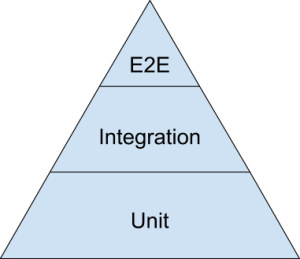
To find the right balance between all three test types, the best visual aid to use is the testing pyramid. Here is a simplified version of the testing pyramid from the opening keynote of the 2014 Google Test Automation Conference.


The bulk of your tests are unit tests at the bottom of the pyramid. As you move up the pyramid, your tests gets larger, but at the same time the number of tests (the width of your pyramid) gets smaller.

Google often suggests a 70/20/10 split: 70% unit tests, 20% integration tests, and 10% end-to-end tests. The exact mix will be different for each team, but in general, it should retain that pyramid shape.


How can I choose what will be the tests for each phase ?


  • End to end tests: Choose the flows/functions most used for the client.
  • Integration tests: Focus in the integration between the functions. E.g. If you register a new client, you should be able to see the new client in the search of the admin site, etc.
  • Unit tests: This part you will see if the function is working (single function).You should test the validations, negative scenarios, positive scenarios… E.g. If you register a new client, you should be able to check if the message in the end is ok, if the client will appear in the database, if you can register an invalid client…


Hope you like it guys, I read the original article and it seemed to me that the guy doesn’t think it is too important end-to-end tests. I don’t agree with it, maybe for this reason I changed the way he was speaking about (If you still want to do end-to-end tests). End-to-End tests is important as any other test phase, the difference is that you don’t need to do all the small tests in this phase. It is just my thought… And you can write your comment, suggestion too in this post.


Thank you ! See you next week 🙂

Sourcehttp://googletesting.blogspot.com.br/2015/04/just-say-no-to-more-end-to-end-tests.html?utm_source=feedburner&utm_medium=feed&utm_campaign=Feed:+blogspot/RLXA+(Google+Testing+Blog)&m=1

Webinar: Best Practices for Mobile CI – Sauce Labs

Hey guys, today I will post a webinar that I joined last week about Mobile CI.

It is very interesting, so you will see briefly when you need to use, why, how it works, etc. It lasts 43 minutes so, make sure that you have time to watch. Jump to 00:27:35 to watch the demo of Sauce Labs.

To download or watch you need follow the instructions in the link below:

https://saucelabsreview.webex.com/saucelabsreview/lsr.php?RCID=06e87f252b274b37b4500335b35ef868


What is CI for mobile ?

Screen Shot 2015-05-28 at 10.45.39

Automatically – every commit

How does it works?

Screen Shot 2015-05-28 at 10.46.57

Why ?

– Reduce the need for human-based testing (Save money and time)

– Faster Feedback

– Automate Everything (Very optimistic point of view)

– No touch configuration

– Automated OTA Distribution

– Code Validation: Automated Builds and Tests


How choose the right process ?

Screen Shot 2015-05-28 at 10.53.00


Depend the size of the

company.


Mobile is harder

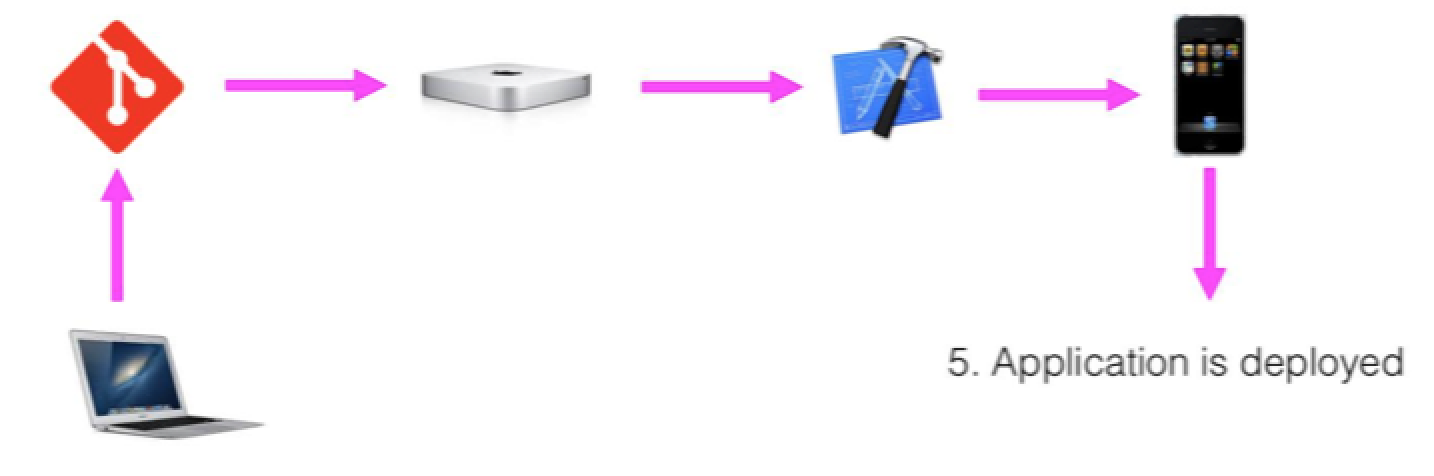
– Infrastructure (If you are building in iOS – You will need XCode, a MacMini, etc.)

– Compilation/Code Signing (You have to configure your build machine, so you will need your key store file, mobile provisioning…)

– Testing (What is the right time to use, challenge to choose what is the better for the project- real devices, simulators…)

– Deployment


Simulators x Emulators x Devices

Simulators

– Used by iOS, included w/ XCode

– Execute i386 instruction set, not ARM

Upside: Very fast compared to Emulators

Downside : You don’t have access hardware functions (GPS,Bluetooth Radio, Accelerometers,etc)

Emulators

– Used by Android, included with Android sdks

– Execute ARM (or native device instruction set)

Upside: You can find free tools

– Downside: Very slow compared to Simulators

– Do not have access to certain hardware functions (GPS, Bluetooth Radio, Accelerometers, etc)

Devices

Upside: Reproduces the actual performance experienced by your users

– Upside: The only way to catch manufacturer/OEM bugs

Downside: Very expensive to configure and maintain compared

– Upside: Full access to hardware functions (GPS, Bluetooth Radio, Accelerometers, etc)


When to use devices vs simulators/emulators ?

– Emulators and Simulators are an excellent solution for running automated tests during development. They are inexpensive and will reliably catch most problems.

– Physical Devices can be used on a lower frequency (i.e. pre-release, weekly, daily, etc.). They are the only way to catch performance problems, test certain hardware features and find OEM issues. In the least, devices should be used before every release.


Unit Testing

– 77% of developers said app quality is “very important or mission critical”

– 80% of mobile developers test their apps manually

– Only 13% of mobile developers use automated testing


Unit vs Functional

Unit: Testing small pieces of code

Functional: Testing button clicks and UI interaction

Benefits:

– Instant Gratification !

– Repeatable

– Can automatically test every commit

Challenges:

– Unit Tests are not users

– Lot of work to write and maintain them

Which framework to use ?

– You need to remember:

– What is the language/framework do your developers know

– Open Source/Community Support

– 3rd party framework requirements


CI Tools/Services for mobile

Jenkins:

Open Source, Lots of plugins, iOS and Android 

 Self-Hosted, DYI solution (Setup all the environment, it isn’t easy this part)

Travis CI:

Hosted Solution, OS X support, lots of plugins, iOS and Android 

Tedious setup process

Ship.io:

Hosted solution, Designed specifically for mobile, Easy setup, iOS and Android 

Less flexible than other solutions

Xcode CI:

Integrated w/ Xcode, Apple-Supported

Self-hosted, iOS Only

Thank you guys, thank you Sauce Labs ! Hope you like it !

Automated Testing of REST Services

Hello guys, I have been busy these days, for this reason I am a little late.

In my new project I have been working with web-services and I think this could be useful if you want to do automated tests of Rest Services. I summarise the post, because I don’t agree 100 % with this guy. He says that if you are testing the web service you don’t need to test the client, but the behaviours are different, so you still need test the clients, not the data but the behaviour.

Integration tests were more complex task at that time because such tests imply usage of some mock frameworks. Since an API is consumed by different clients (smartphones, desktops…), make sense to gather a group of tests which check a common logic for all types of clients and to highlight the client-specific test scenarios to focus on a client specific logic. The logic works with data which was already tested in API layer. Such approach gives us an amazing testing strategy. We just need to pay all attention to a UI and some specific features instead in different clients: mobile, web, etc. BUT we still need test different clients, the difference is: We don’t need to test the data, just the behaviour of the client 🙂


Automated Testing of REST-services

In my experience I have been testing REST-services manual and automated. The framework that we are using here is Abdera to generate the xml and HTTP Client to post the xml on the server. But this guy is using REST-assured library . It is very easy to use and it works well with the most popular java testing frameworks such as TestNG, JUnit and Hamcrest.

@Test
 public void getLandLaordTest() {
 given()
 .contentType(ContentType.JSON)
 .pathParam("id", "DoYlvMXN")
 .when()
 .get("/landlords/{id}")
 .then()
 .statusCode(200)
 .body("firstName", equalTo("Sam"))
 .body("trusted", equalTo(false));
 }


Ok, guys it is this, see you next week !

Source: http://java.dzone.com/articles/automated-testing-rest?mz=62823-enterprise-integration

How to read the text from an Alert(ios) in calabash ?

Hi guys,

It’s been a long time that I don’t post anything about calabash and mobile automation, but I found this in my favorites and I realized that could be useful for someone. I am not sure if doesn’t exist another way to read a text inside an Alert, but this is one of the solutions:

Example of step:

Then I see a popup with latitude 10 and longitude 20


So,

Then /^I see a popup with latitude (\d+) and longitude (\d+)$/ do |lat, lon| 
  msg = "Latitude:#{lat}\nLongitude:#{lon}" 
  should_see_alert_with_text msg 
end

Finally:

def should_see_alert_with_text (text) 
wait_poll(:until_exists => 'alertView', :timeout => 5) do
  actual = query('alertView child label', :text).first
  unless actual.eql? text 
    screenshot_and_raise "should see alert view with message '#{text}' 
but found '#{actual}'" 
  end 
 end 
end


Thank you ! See you 🙂


Source: http://stackoverflow.com/questions/16351791/how-do-i-read-text-from-an-alertios-in-calabash